

Oscar The Wheely Great Dog
since becoming caretakers of a dachshund with disabilities, my partner and I have become more of a team – and Oscar's our beloved mascot
words & photos by Jade Juedes
With four years caring for a dog with disabilities under our belt, my partner and I have become pros at catering to our dog's needs and wants throughout any given day, like the ever-dutiful servants that we are.
My dachshund, Oscar, has Intervertebral Disc Disease (IVDD), a condition where his spine has multiple areas with significant calcification.
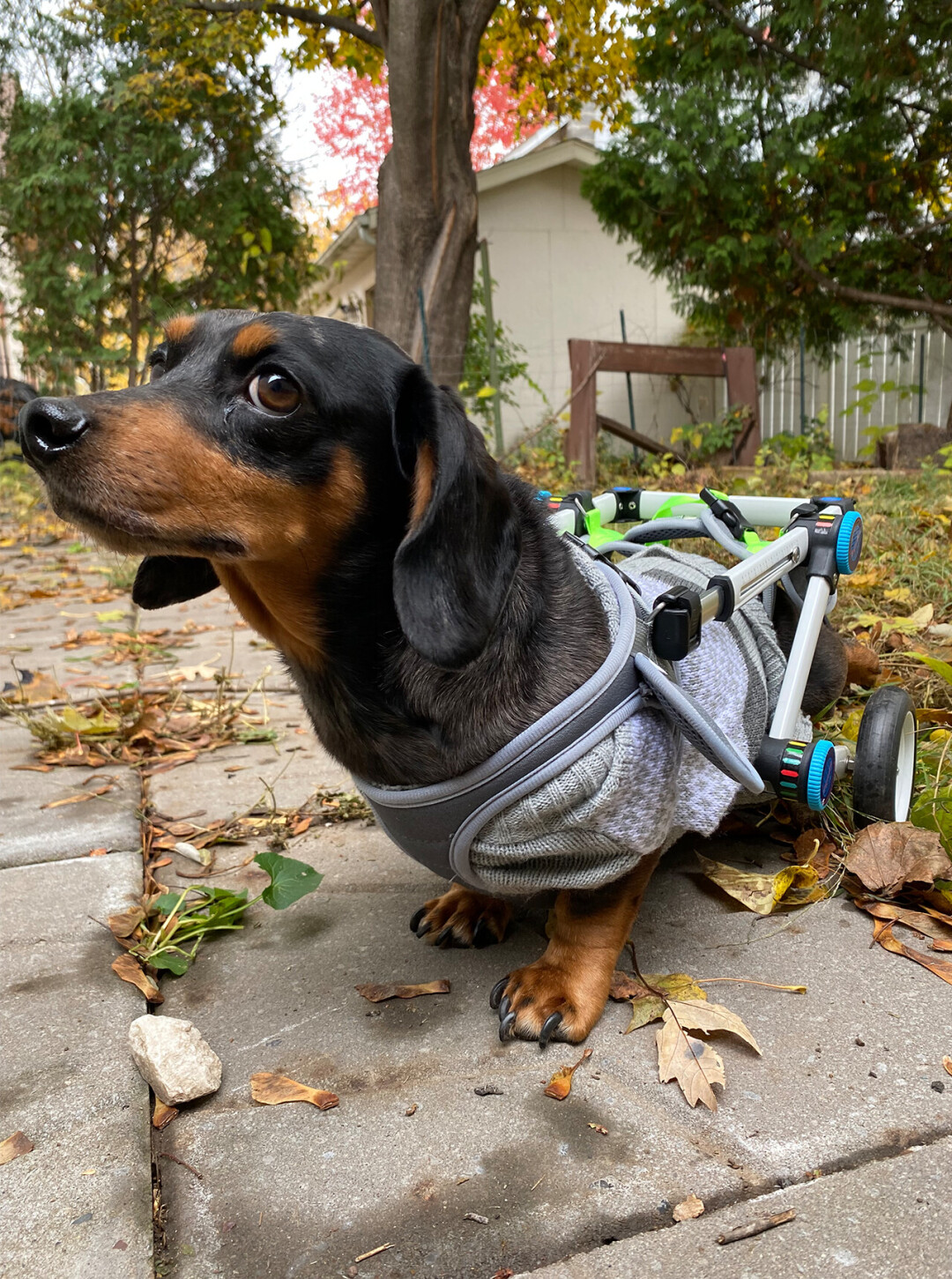
Caring for Oscar entails a few different tasks than the usual routines of looking after a dog. When Oscar goes on walks, he’s either pushed around in a stroller, or he’s in a mobility cart that has back wheels.
My partner and I also need to express Oscar’s bladder, instead of taking him out in the back yard to do his business. We do this about four times a day starting first thing in the morning.
Each morning begins with Oscar’s favorite five minutes of the day: being fed. Before he wakes, you'll find Oscar in his crate at night with a fluffy bed and several blankets to keep him cozy and, most importantly, keep his hips supported.
When he is released, this dog goes buck wild – straight to the kitchen. Then he barks nonstop until I get in there and fill up his bowl with kibble.
Since we have hardwood floors, we often won't put Oscar in his wheels when inside. He's still able to scoot around fairly easy! Don't worry, we have plenty of rugs down to make sure he doesn’t fall.
When Oscar is "running," just imagine a seal pup moving very fast on its flippers. It sounds crazy, and trust me, it looks kinda crazy too. His excitement each morning is a routine that has never wavered, which makes me feel relieved, like we're doing something right.
Oscar has never let his disability stop him from doing whatever he wants.
While I’m preparing his breakfast, Oscar will zoom back into his room (my office), where I will put his bowl down for him. He proceeds to eat so fast to the point that he's hardly tasting it.
While he eats, I then prepare another station in my office where we express his bladder and help him with bowel movements. This is one of the lesser seen aspects of having a pet with IVDD.
I set up packs of pee pads, baby wipes, paper towels, his diapers, diaper liners and disposable gloves. Then, I position several pee pads on the floor and move Oscar onto one. I put his current used diaper in a hamper for washing later and move on to expressing his bladder.
You have to position your hands carefully under his bladder and also support his back, while he bi-pods over the pad. I massage his bladder and get as much urine out as possible, so he doesn’t end up with a urinary tract infection. This is also when he will voluntarily pass a bowel movement, or we help him out to get it done.
We’ve become much more of a team, and Oscar is our mascot.
Our vet has demonstrated how to do these steps, and my partner and I have also done our research on the specific anatomy of dachshunds, watching videos online of other pet owners with dogs experiencing the same conditions.
A lot of these moments also come down to trial and error. For example, we learned quickly that he would always need to wear a belly band diaper.
When my partner and I began learning all these new tools to support Oscar, it caused a lot of stress between us. When we got Oscar to pee for the first time after his diagnosis, we both cried. It was a small victory for our journey with him; it made us feel the reality of taking care of Oscar would be something we could take on together.
Once Oscar is all cleaned up for the morning, I put a fresh diaper liner and reusable fabric diaper around his waist, and he’s off to do a “Tour de Oscar” around the house, to make sure he’s eaten every scrap off the ground that may have gotten on the floor overnight.
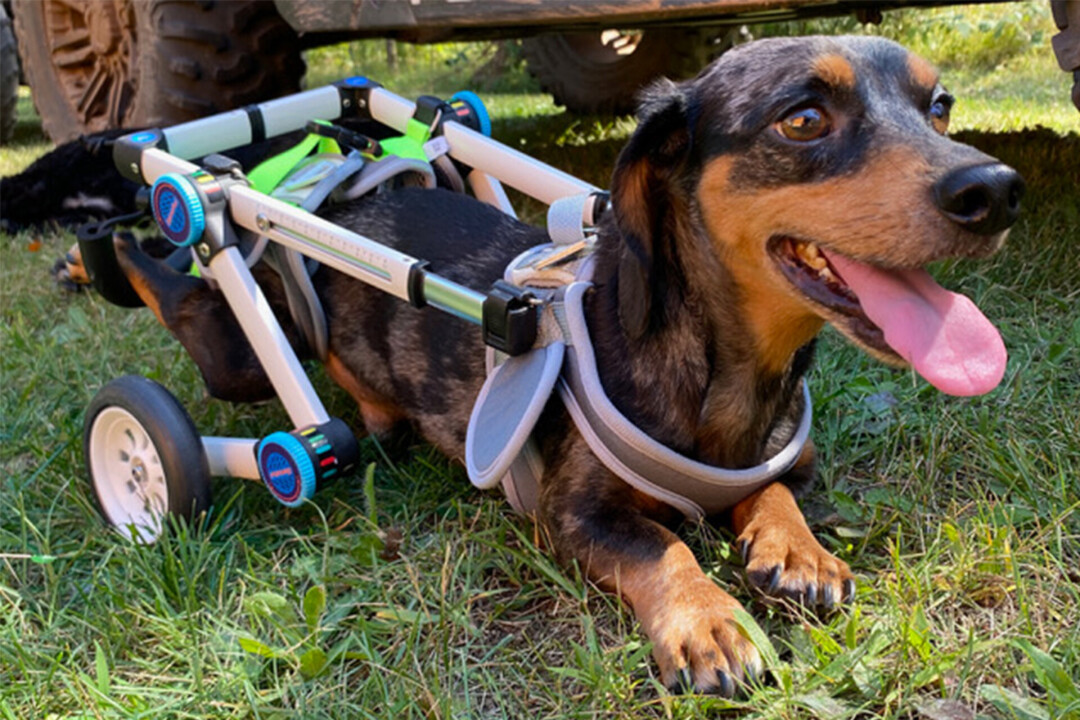
If my partner or I are home during the day, Oscar will stay out and about, with supervision.
Being a 10-year-old dachshund by this point, he mostly just sleeps and eats his day away. At around noon, Oscar will get another round of expressing his bladder, and some more water. This happens two more times in a day, around 5pm and 8:30pm.
To get exercise and outside enrichment, I love to take Oscar into the sunroom where he likes to sunbathe, or I will take him on a walk in either his wheels or in his stroller.
My partner and I have learned how to effectively talk to each other – and our friends – about Oscar to keep others informed on his health. We let one another know when Oscar has had a bowel movement, how his demeanor is at the time, and assess when and who will take care of him next so we both don’t experience burnout.
Caring for a disabled animal has established this sense of absolute responsibility in us as a pet owners. We’ve become much more of a team, and Oscar is our mascot. When observing Oscar's demeanor since his IVDD diagnosis, I haven’t seen him ever let this disability keep him from living a fulfilled life.
Giving up on Oscar was never an option. Whether your pet has a disability or not, I implore all owners to do the same for their four-legged companions. When things get hard, our pets only have us to be their cheer squad.
They can only continue to thrive if we give them the chance to.