

Connection Before Correction: A Calmer Way Into the School Year
Eau Claire parent coach Amy Fink on the after-school meltdown — why it isn't bad behavior, it's biology — and what parents can do in the moment
Your child walks in the door at 3:45pm. The teacher says they had a great day. Fifteen minutes later they're on the kitchen floor sobbing because their snack was cut into squares instead of triangles.
If you're a parent in the first weeks of a new school year, you know this scene, and you know the thought that follows: Why is this such a big deal? Why can't they just calm down?
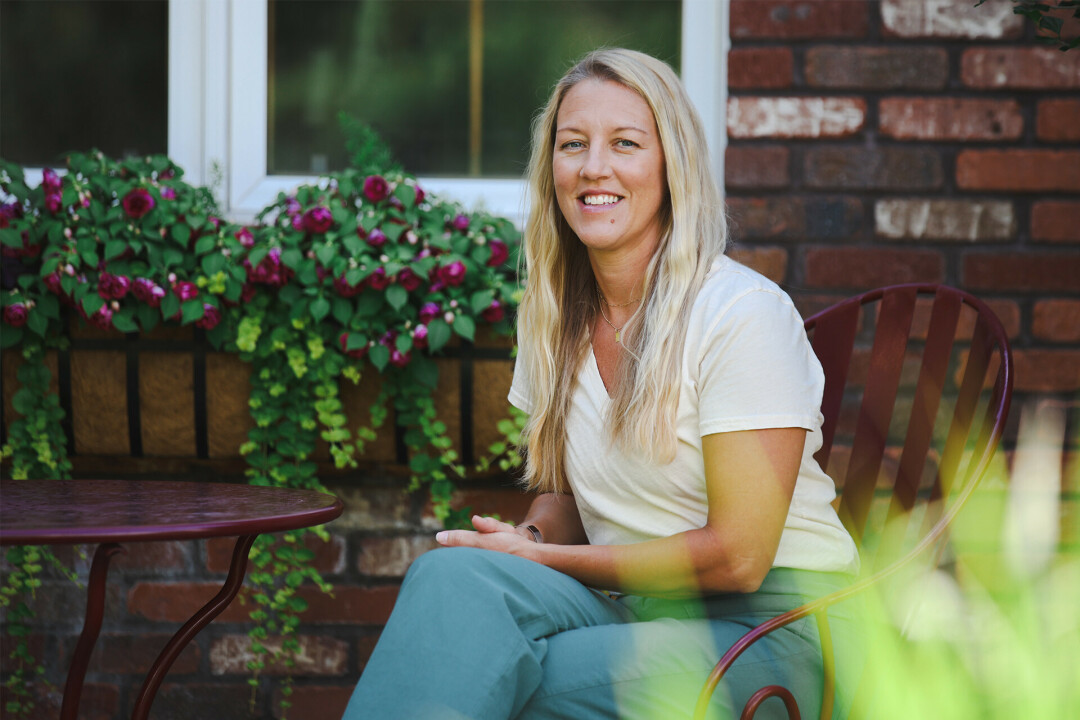
Amy Fink, founder of Colorful Minds Parent Coaching in Eau Claire, would like to offer a different read on that moment.
“Your child isn't giving you a hard time,” she says. “They're having a hard time. And the difference matters more than you think.”
She'd go a step further: that meltdown is a compliment.
“Your child held it together for seven hours in a place where they had to,” Amy says. “Then they get to the one person they feel safest with, and they let go. That's not defiance. That's trust.”
The back-to-school stretch is the busiest season of Amy's year, and she thinks she knows why. “August and September ask kids to run on a completely different operating system, new schedules, new expectations, a lot less unstructured time. Their nervous systems are working overtime to keep up. And the ones who cope beautifully at school are often the ones who fall apart at home.”
It's not bad behavior. It's biology.
Amy spent more than a decade as a K–3 teacher before founding Colorful Minds, and she watched the same pattern play out from the other side of the pickup line: children under more pressure at younger ages, and parents carrying the quiet weight of feeling like they were failing.
“Behind closed doors, everyone else is having issues too,” she says. “Parents feel like they're on this island, alone. But no, it's happening to everyone. We're in this together.”
The explanation, she says, is developmental rather than moral. When a child hits something overwhelming, the amygdala, the brain's alarm system, floods the body with stress hormones. Meanwhile the prefrontal cortex, the part responsible for logic, reasoning, and self-control, isn't fully developed until a person's mid-twenties, and it's barely online during a moment of high emotion.
“So when we ask a dysregulated child to use their words or think about their choices, we're asking a brain that's temporarily offline to do something it physically can't do right now,” Amy says. “Telling a child to calm down is a little like telling someone who's drowning to swim better. The intention is good. The timing is off.”
What children need in that window isn't instruction. It's a regulated adult nearby.
Give them five quiet minutes before 'How was your day?' Let them have a snack, stare out the window, breathe. Then connect.
“We can't change a child's behavior. We can change how we respond to it,” she says. “When you stay present and grounded in the storm, your nervous system communicates safety to your child's nervous system. You become their anchor.”
One of the simplest tools she teaches is to name what you see rather than argue with it, “You've been holding it together all day. That's a lot.” Dr. Dan Siegel calls it “name it to tame it”: putting language to a feeling helps the thinking brain come back online.
That process is called co-regulation, and it's the foundation of Amy's work. It's also why parent coaching turns out to be so much about the parent.
“You know the things your kids do that drive you crazy? They learned it from you, and that's why it drives you crazy,” Amy says, with warmth rather than judgment. “When parents get curious about their own triggers, they start seeing their children for who they actually are.”
A framework for the 3:45 meltdown
Amy's tool for these moments is the CALM Framework, four steps parents can use before they respond, in the middle of a hard moment, or afterward as a guide for repair.
Connect to yourself first. Your child borrows your calm grounded state, but only if you have it to offer. Before you respond to the behavior, check your own nervous system. You cannot co-regulate from a dysregulated state. Take 2-3 deep breaths and say “I am okay even when my child is not in this moment.”
Ask what the behavior is telling you. A meltdown is a nervous system in protection mode, signaling an unmet need for safety or connection. Not defiance. Not manipulation. Behavior is always the message.
Linger. A child's nervous system is constantly scanning your face, voice, and body for cues of safety, a process Dr. Stephen Porges named neuroception. Even when your child pushes you away, stay nearby. Soften your face. Lower your voice. Keep your body open.
Meet them where they are, not where you want them to be. When the thinking brain is offline, teaching doesn't land. Don't demand they calm down first, and don't rush it. Once their nervous system returns to safety, cooperation and problem-solving become possible again.
“Notice that three of those four steps happen before you say anything to your child,” Amy says. “Parents come to me wanting a script. It's almost never the script. It's whether your own nervous system can hold the moment.”
Her most practical back-to-school suggestion is smaller than most parents expect: don't lead with questions. “Give them five quiet minutes before ‘How was your day?' Let them have a snack, stare out the window, and breathe. Then connect. You'll be amazed what comes out when you're not asking for it.”
Parenting with, not over
Underneath the framework is a shift Amy describes as moving from parenting over or under children to parenting with them.
Parenting over is the control-heavy approach many of us grew up with, you call the shots, and the rules come from “I know best.” Parenting under is the permissive route, letting things slide to avoid conflict. Parenting with is the middle path: mutual respect, clear structure, real connection, both of you leading together.
“Connection always comes before correction,” Amy says. “That doesn't mean there are no limits. It means the limits come with love attached, and when a child feels safe and heard, they're far more open to guidance in the first place.”
The goal is to be the parent who keeps coming back, who shows their child that hard feelings are survivable. That's not small work. That's the work that changes families.
Much of the work, then, is helping parents widen what psychologists call the window of tolerance, the zone where you can stay clear-headed and respond rather than react. “When you're outside your window, you snap before you realize it, or you check out entirely,” Amy says. “That's not a parenting failure. That's a nervous system response. And you can widen the window.”
You don't have to be in crisis
Families often find Amy during a hard stretch, a diagnosis, a divorce, a school year that came off the rails. But she's insistent that coaching isn't only for those moments.
“There doesn't need to be a ‘big anything' to get started,” she says. “I work with parents who simply want to connect more deeply with their kids.”
She works with parents of children ages 0–12 through individual sessions (virtual or in person) and, new since her last conversation with Volume One, a 12-week group program that moves a cohort of parents through the work together.
“The group piece surprised me,” Amy admits. “Parents walk in expecting strategies and walk out with a community. Hearing another parent describe your exact Tuesday night does something no worksheet can.”
Starting the year differently
Amy's ask for parents heading into this school year is small on purpose: pick one transition, the after-school reentry, the bedtime handoff, the morning out-the-door, and change only your half of it.
And if you read all this and thought, I don't do any of this right, she'd like to stop you there.
“Repair is always available. The goal was never to be a perfectly regulated parent who never loses their cool,” she says. “Guilt isn't a growth strategy. The goal is to be the parent who keeps coming back, who shows their child that hard feelings are survivable. That's not small work. That's the work that changes families.”
Amy offers free 30-minute consultations for parents who want to talk through their own situation. “Parenting is hard sometimes. There's support available, and you don't have to do it alone.”
To learn more about Colorful Minds Parent Coaching, including free resources and consultation scheduling, visit ColorfulMindsParentCoaching.com.
Amy Fink, M.S. Ed., holds a master's degree in early childhood special education and completed her coaching certification through the Jai Institute for Parenting. Her CALM Framework draws on polyvagal theory, the neurobiology of attachment, and co-regulation research. She works with parents of children ages 0–12 in the Chippewa Valley and, through virtual sessions, nationwide.
Colorful Minds Parent Coaching
Address: 3119 Golf Rd., Suite 107, Eau Claire
Phone: (715) 210-4302
Website: ColorfulMindsParentCoaching.com
Instagram: @colorful_minds_parent_coaching

