STORIES & SONGS: Eau Claire's Next Generation of Qeej Players
local club opens up traditional Hmong instrument to boys and girls, music builds students' interpersonal relationships
Evelyn Nelson, photos by Alex Barber, Andrea Paulseth |
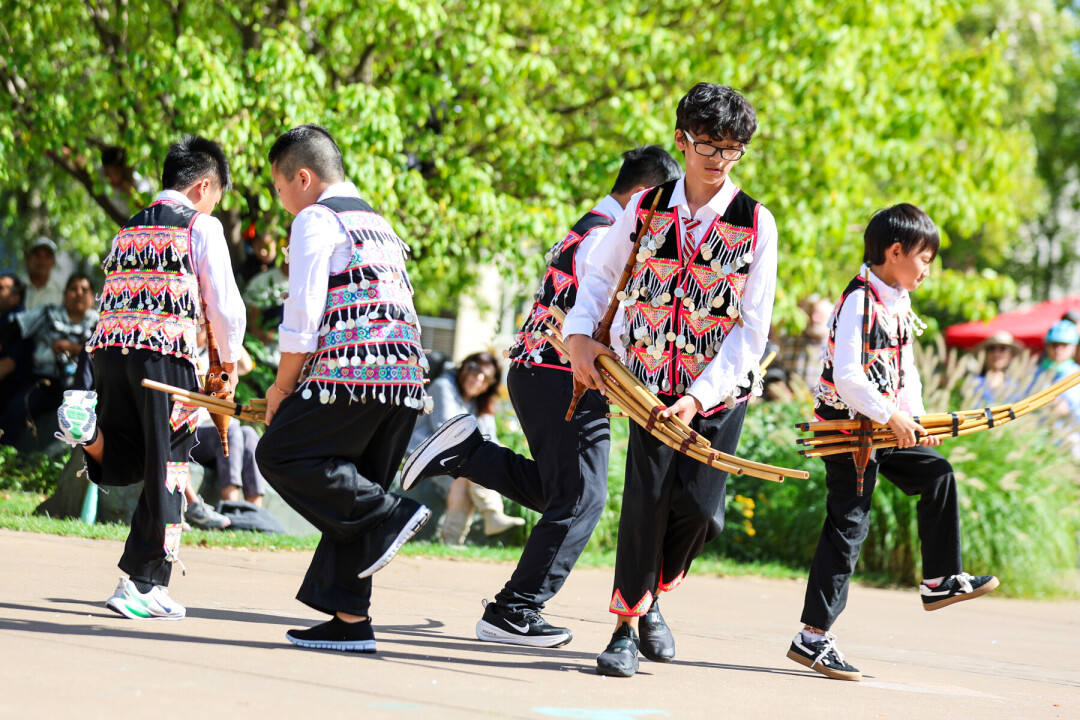
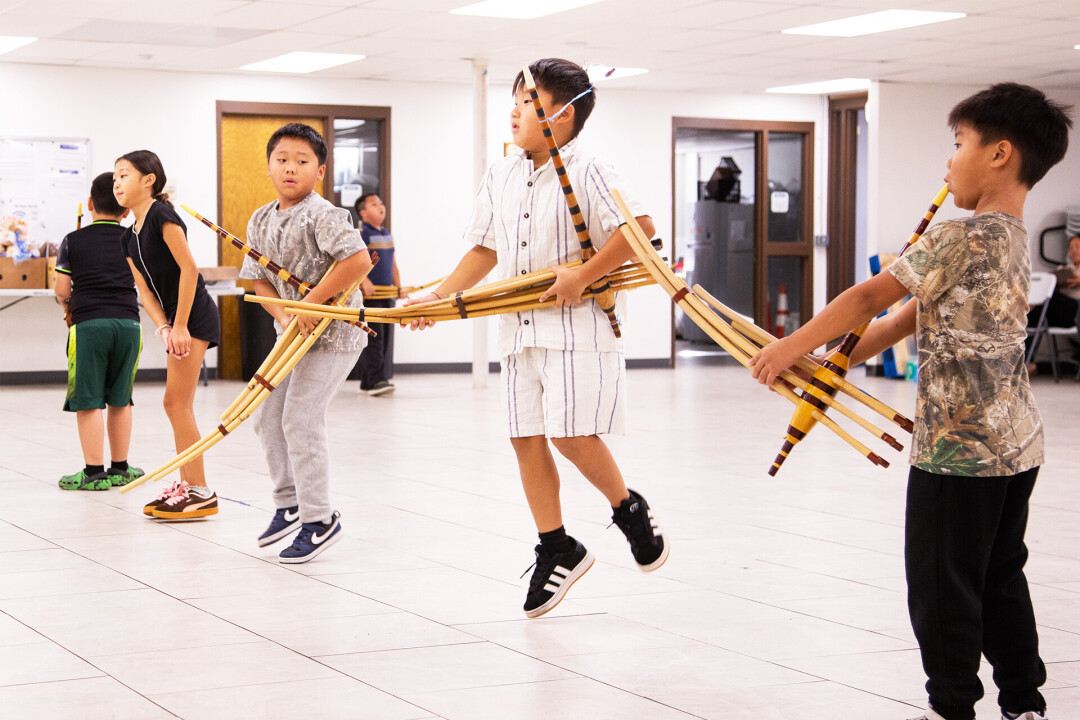
Young boys and girls in traditional Hmong regalia hopped, dipped and twirled in unison at Eau Claire’s latest Multicultural Festival this September. Those dancers each held a qeej, a traditional reed instrument.
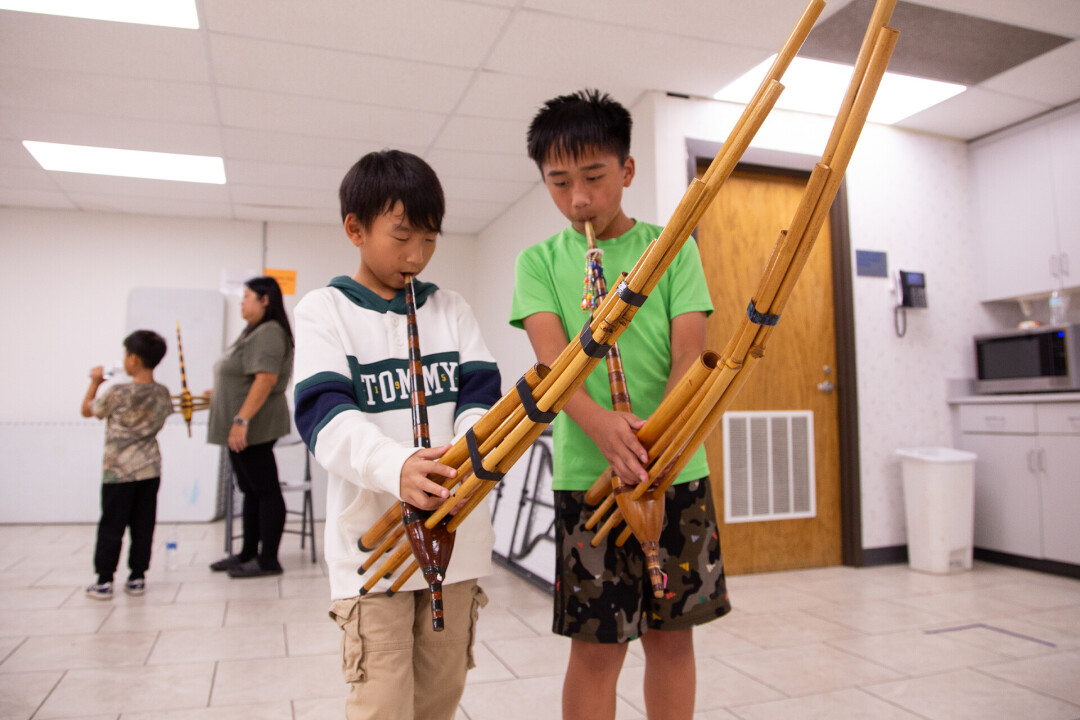
The group performed as part of the ongoing Qeej Club led by local Pheng Yang and the Eau Claire Area Hmong Mutual Assistance Association (ECAHMAA). Each Tuesday evening from 6-7pm, Pheng guides the young participants through instrument melodies and footwork – all while fostering a shared sense of togetherness.
In the Chippewa Valley, he stands as one of the few instructors preserving and sharing Hmong musical heritage through the next generation.
“With ECAHMAA, we’re trying to be open … and have a class where the kids can come together (and) just have fun,” Pheng said.
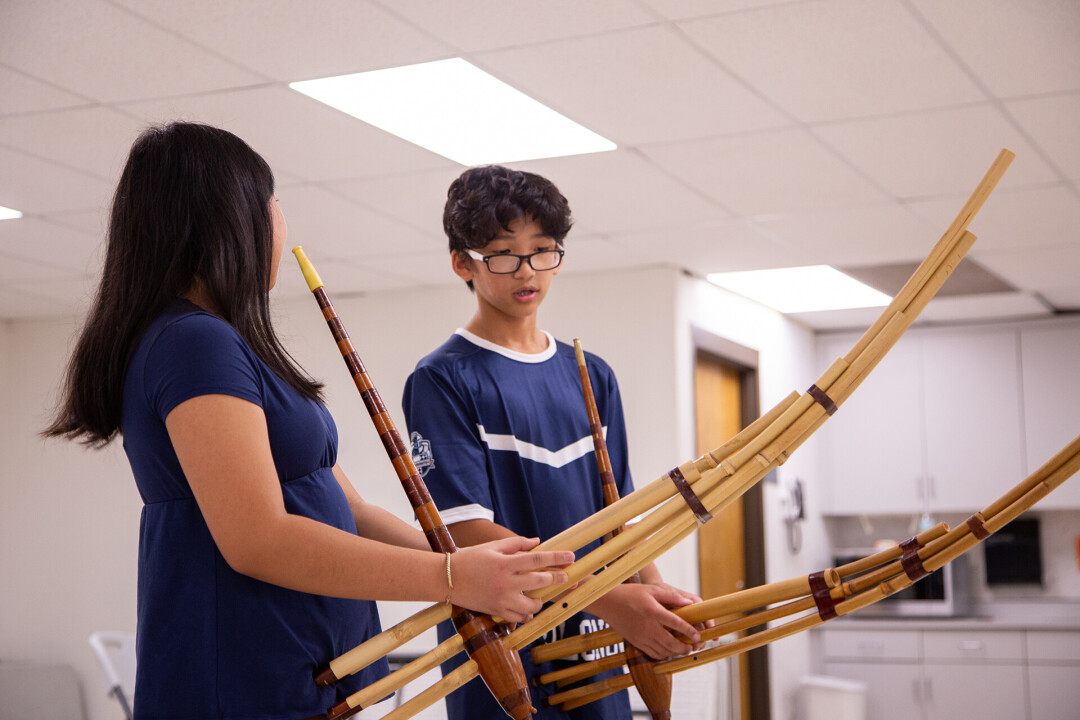
Qeej (pronounced phonetically as “gheng” or “kheng,” starting with a soft g or kh sound) Club began last year through ECAHMAA with funding from the statewide Wisconsin Arts Board. Through that financial support, the program has since secured five reed instruments in varying sizes for kids ages seven and up.
Historically, the qeej has been played exclusively by boys and men; its tones mirror the Hmong language, as musicians communicate with one another and the spirit world.
According to ECAHMAA grants specialist, Pakou Thao, the local club originally began with five or six students.
This fall, enrollment has doubled. 12 kids – a mixture of boys and girls – have been split into two cohorts for the club: a returning squad of seasoned players and a new section for beginners.
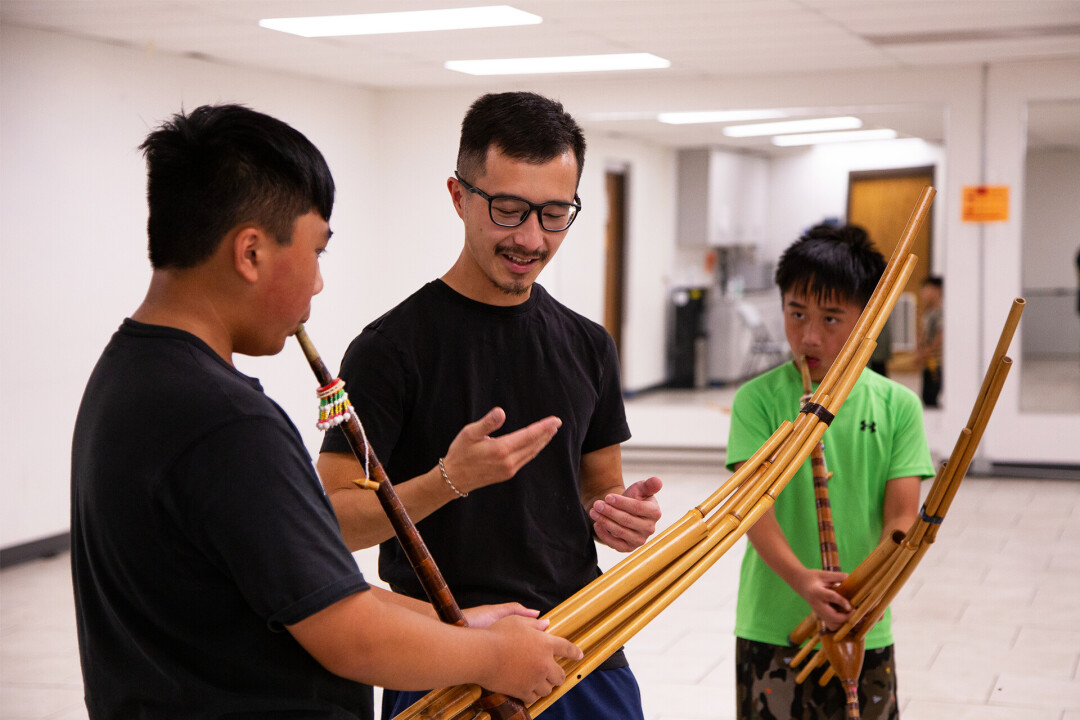
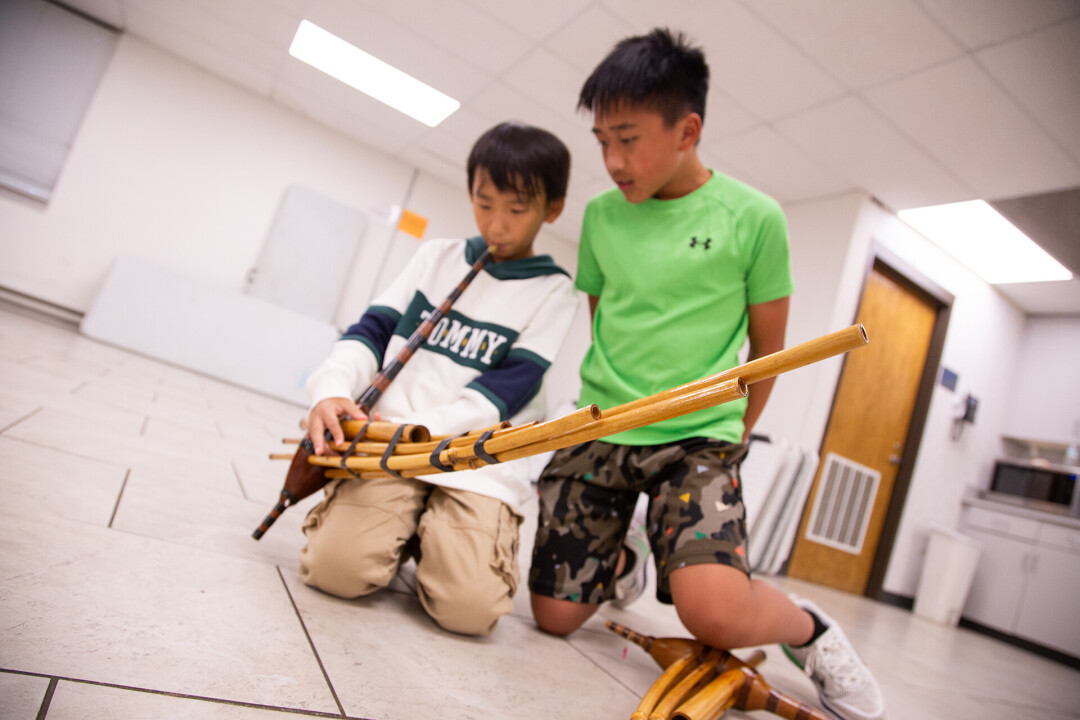
Crafted with six bamboo pipes, musicians play the qeej by drawing air through its mouthpiece. When asked what western instrument it could resemble, Pheng noted no parallel could truly capture the essence of the qeej.
“It’s just a way to communicate, like speaking in the Hmong language but through sound,” Pheng said. “Each of the sounds can make its own word and if you combine two or three of the pipes together, then it’s able to make different words.”
“There are so many stories that you can tell if you understand how to play the notes and are able to get the sound correct to match the wording,” he said.
Locals may have caught the Qeej Club’s showcase at downtown Eau Claire’s Phoenix Park pavilion during September’s Multicultural Festival, but ECAHMAA supporters know the youth ensemble’s vibrant routines from annual Hmong New Year gatherings.
Pheng, too, has performed in qeej competitions during New Year events – these appearances on stage ultimately led to his role leading the local club.
“It’s just a way to communicate, like speaking in the Hmong language but through sound.”
pheng yang
qeej instructor, Eau Claire Area Hmong Mutual Assistance Association
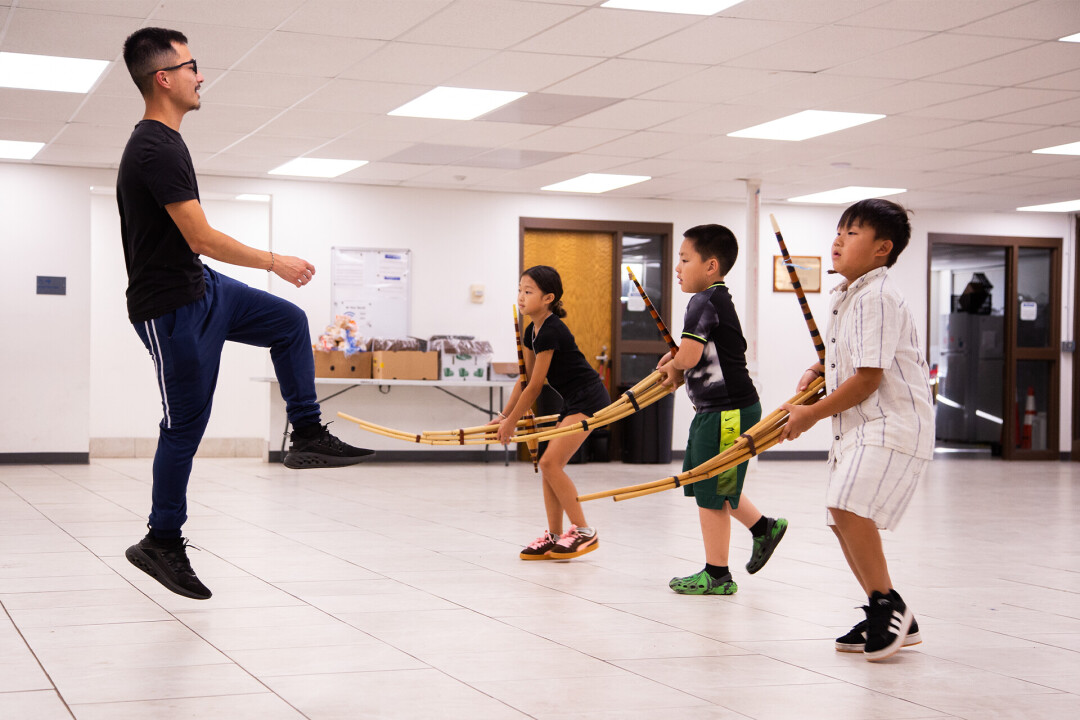
Playing the qeej involves “jumping” or executing traditional dance moves that are passed down through generations, Pheng said. Performers must synchronize their physical movements and flow with the notes played, so the sound and landing of the moves sync together.
One of the most fun parts of Qeej Club consists of these performances, where kids begin showing off more challenging music and movement. However, the instrument traditionally is used in solemn settings to connect families during periods of mourning or funerals, Pheng added.
Through casual learning lessons at each club meeting, young players better understand these unique contexts. In turn, Pheng said, there’s an element of strength gained by facing life’s hardships through a deepening of their cultural roots.
“(Through) the instrument, you’re able to learn about yourself more (and) connect with others with all the challenges of learning,” Pheng said. “Through learning how to perform you’re able to keep pushing yourself to learn and go higher beyond what you currently know now.
“That way, they can better themselves personally and better themselves for the world,” he continued.
Looking ahead to this year’s Hmong New Year celebration – slated for Oct. 17-18 at the Sonnentag Center (1075 Menomonie St., Eau Claire) – the Qeej Club will showcase their talents once more through on-stage performance and welcome parades.
Visit the Eau Claire Area Hmong Mutual Assistance Association social media page (@eauclairehmaa) to see more of its Qeej Club in action. To register your child or learn more information, email pakou.thao@ecahmaa.org.