Ambitious Regional 10-Year Destination Master Plan Launches In Eau Claire
first-time endeavor for region led by Visit Eau Claire and Corragio Group, upcoming community feedback sessions slated for October and November
McKenna Scherer, photos by Andrea Paulseth |
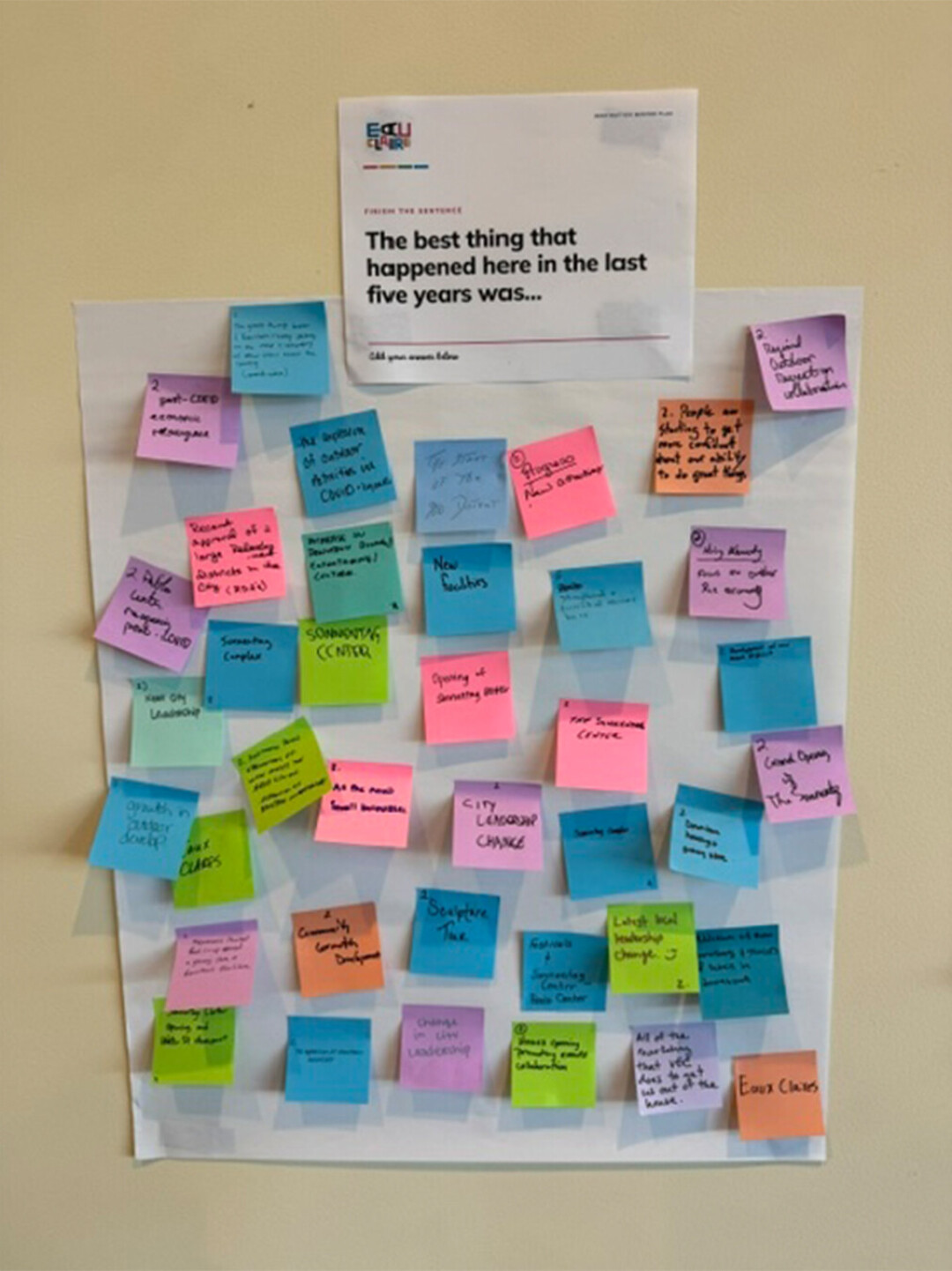
What are things outsiders get wrong about Eau Claire? What’s the best thing that’s happened here in the past five years? What are some of the things that could keep this community from thriving in the near future?
Those are some of the questions strategic planning firm Corragio Group asked a few dozen locals during the invite-only “Destination Master Plan Kickoff” workshop event on Sept. 9.
The Destination Master Plan (DMP) project is an ambitious endeavor being spearheaded by Visit Eau Claire (VEC), the wider Eau Claire area’s tourism organization. The DMP is intended to be a 10-year blueprint of sorts – the first of its kind for this region – to align future tourism development with economic, cultural and community goals for the region.
Five area municipalities have partnered for the DMP: the City of Eau Claire, City of Altoona, City of Osseo, Town of Union and Town of Wheaton.
“Tourism in Eau Claire continues to reach historic highs, generating record $480 million in total economic impact in 2025,” a recent media release from VEC noted. “With major new regional assets expanding the area’s footprint, the Destination Master Plan creates a deliberate framework to ensure future growth directly benefits local residents, local businesses and regional infrastructure.”
VEC and Corragio Group will work together to build and execute the DMP’s framework. That model has three phases: “Get Clear, Get Focused, Get Moving.”
(The DMP is guided in part by a steering committee. That seven-member group includes Eau Claire City Manager Dave Solberg, City of Altoona Administrator Roy Atkinson, Eau Claire Chamber of Commerce's outgoing CEO Dave Minor, Metropolis Resort's Sara Schwendemann, among others.)
The “Get Clear” phase, where VEC and Corragio Group look to gain feedback from locals via surveys, interviews and upcoming community listening session events, is happening now through November.
Upcoming Community Engagement Listening Sessions
City of Eau Claire
- 4-5:30pm on Tuesday, Oct. 6
- Pablo Center at the Confluence, Riverfront Hall (128 Graham Ave., Eau Claire)
Town of Wheaton
- 4:30-6pm on Wednesday, Oct. 7
- Wheaton Town Hall (4975 Co. Rd. T, Chippewa Falls)
City of Osseo
- 4-5:30pm on Wednesday, Oct. 14
- Osseo City Hall (13712 8th St., Osseo)
City of Altoona
- 4:30-6pm on Thursday, Oct. 15
- Altoona City Hall (1303 Lynn Ave., Altoona)
Town of Union
- 4-5:30pm on Tuesday, Nov. 10
- Town of Union Town Hall (1506 N. Town Hall Rd., Eau Claire)
The next phase, “Get Focused,” will occur December 2026-March 2027. During that period, a set of priorities for the DMP will be drafted and shared with the community – “before anything is finalized,” VEC states.
Then, from April-June 2027, the final phase “Get Moving,” will… get moving. Without knowing what community feedback and data reviewed during the first two phases will reveal, that phase’s deliverables – “(deliver a plan) with specific owners, funded actions, and public progress updates” – are a bit more vague, for now.
What's a Destination Master Plan?
Back in the 1970s, the World Tourism Organization (now known as UN Tourism) created “tourism master planning” as a formal tool meant to help communities – and their economies – build a successful tourism sector from scratch. That meant identifying infrastructure needs, targeting source markets and aligning government investment, according to global place-making company Resonance.
“Tourism growth used to be an easy political sell, the more visitors meant more jobs, more tax revenue, and more economic cover for the next budget cycle,” Resonance states. “Today, destination leaders are being asked to prove something more difficult: that tourism growth will strengthen the place that hosts it, not strain it.”
Enter, the concept of “destination stewardship.”
That's something locals have had a front-row seat to, whether they knew it or not. Tourism organizations like Visit Eau Claire aren't just marketing engines looking to grow for the sake of growth – at least not anymore.
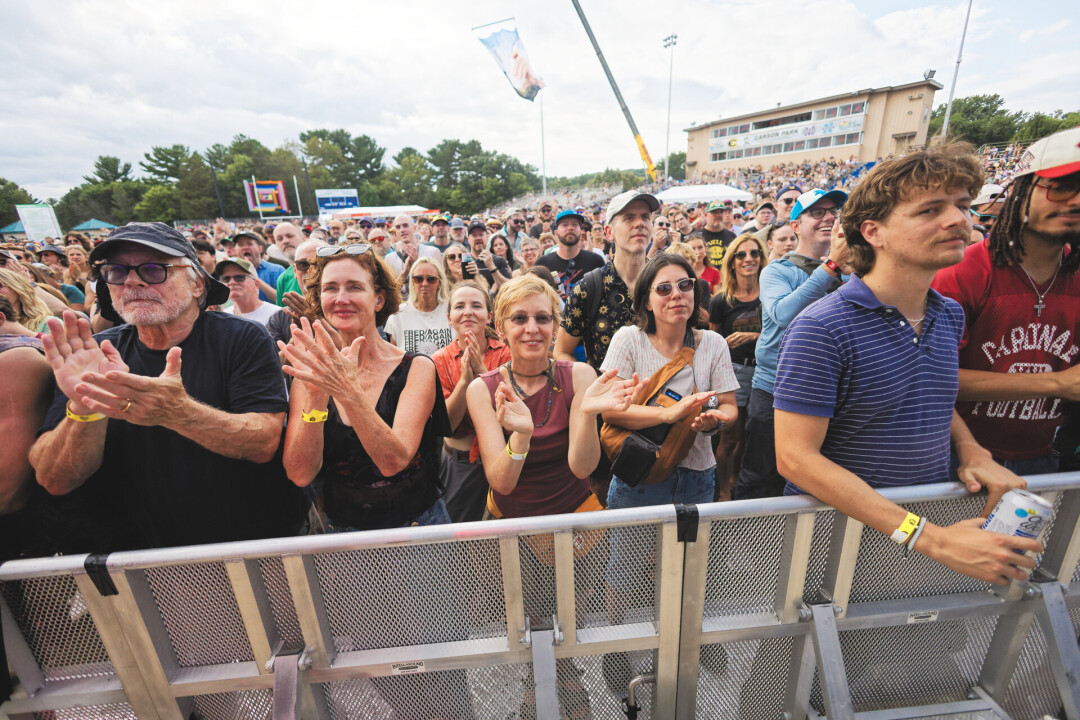
Visit Eau Claire's annual funding is based on getting “heads in beds,” or making the community attractive enough to non-residents that they'll travel to town – hopefully longer than one day – and put dollars toward hotels, restaurants, small businesses, local events and more.
In that way, and in today's landscape, they're more aligned with economic development orgs.
Tourism orgs have to think about what makes their communities tick. Transit, air connectivity, quality of life improvements, recreational assets, the local job market and other factors all have to be taken into account in order to create a real impact (getting “heads in beds” is one way to measure that).
Beyond Visit Eau Claire's purposes, the State Department of Administration's population projections show Wisconsin is going to shrink over the next few decades. Only a few of the state's 72 counties are projected to grow – and Eau Claire is one of them.
There's a big opportunity in that potential; a 10-year plan like the DMP could be one way to plan accordingly – and bring the wider community forward, together.
The Visit Eau Claire Board of Directors is made up of elected officials and business owners, including Volume One's owner and publisher Nick Meyer • Learn more about the Destination Master Plan by attending an upcoming community listening session • More information is available at www.visiteauclaire.com/destination-master-plan