The Beginning Of A Puff Prohibition?
purveyors and patrons will say farewell to legal hemp gummies, drinks, smokeables, oils and more on Dec. 11
words & photos by Evelyn Nelson |

words & photos by Evelyn Nelson |
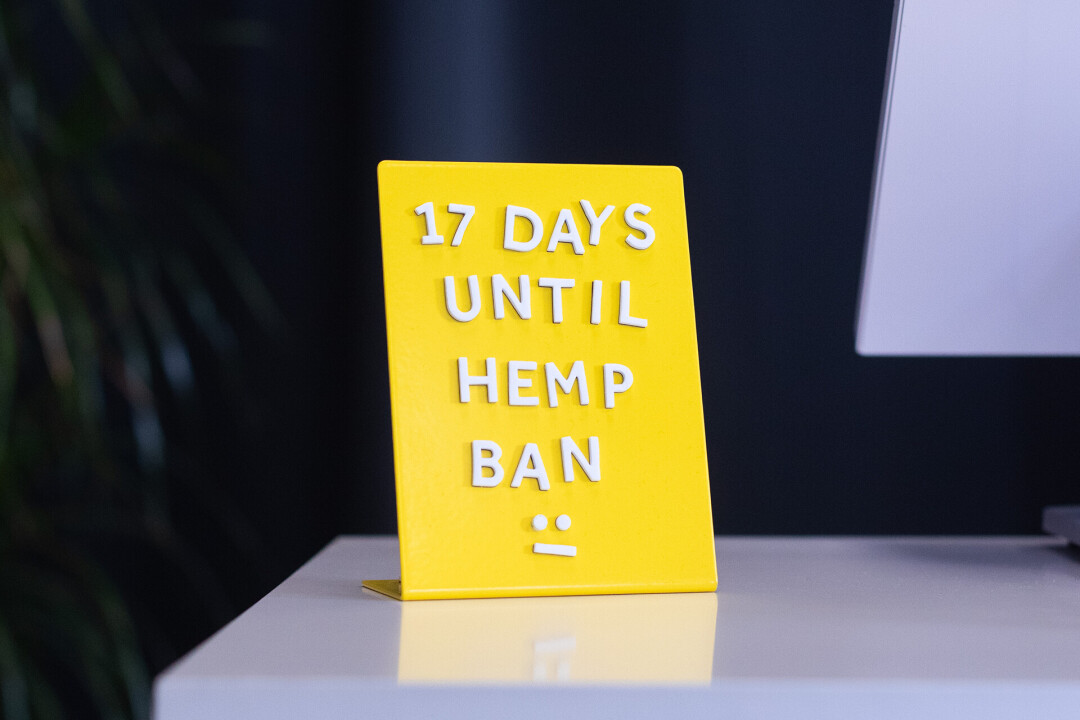
Customers at Steve’s Hemp in downtown Eau Claire now find a new sign next to its register, counting down the days until the United States’ federal ban on hemp is implemented. As of Nov. 24, when this story is released, there are 17 days until the ban takes effect.
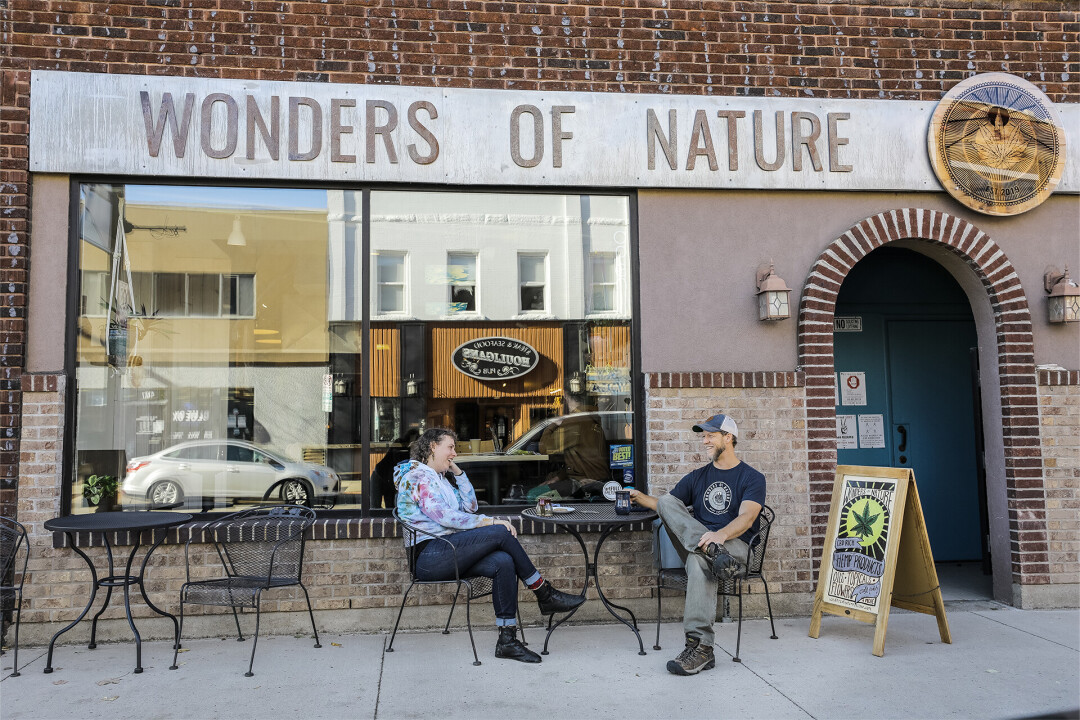
Just a short walk down Barstow Street, at Wonders of Nature, early holiday shopping is already underway; the store is receiving its final inventory shipments ahead of what staff call “Green Friday.”
These two shops aren’t alone in their final product push to customers. Local growers, processors and small businesses across Wisconsin face an uncertain future as the impending ban on hemp products creeps closer.
Surrounded by states where adult-use cannabis has been legalized, like neighboring Minnesota, Michigan and Illinois, Wisconsin finds itself positioned as something of an island. State laws already restrict recreational use of the plant; medical use has not been legalized either.
“I’d say 70% of customers that come in don't really know what's going on or know about (the federal ban). We are trying to be as vocal as we can of what the actual facts are.”
steve hampton
owner, steve's hemp
As of Nov. 17, Senators Tim Sheehy (R-Montana) and Amy Klobuchar (D-Minnesota) introduced the Hemp Guardrails Act to encourage a nonpartisan “federal regulatory framework for hemp-derived consumer products.”
While cannabis and hemp are legally recognized as separate industries, as it stands each be classified as illegal come Dec. 11. When the ban takes effect, both will be considered Schedule 1 narcotics on a federal level.
For any person who grows, sells or uses hemp products – from those gummies that help you sleep to the infused drink before a night out – this fundamentally changes what can be consumed legally, and what THC-focused businesses will remain open.
Mainstream grocery stores, craft breweries, boutique retailers and more will also face immediate shifts in their inventory as these products disappear from the shelves.
As a result, local advocates are working to sound the alarm ahead of the economic, social and cultural ripple effects this shift threatens spark in their communities.
It’s been less than ten years since the surge of hemp-focused businesses have popped up in Wisconsin. In 2018, President Donald Trump signed the Farm Bill into law; a landmark provision at the national level, it defined legal hemp products as a cannabis plant with less than 0.3% delta-9 THC by dry weight.
In states like Wisconsin, the Farm Bill allowed farmers and retailers an opportunity to grow or sell limited THC products.
Last year, that opportunity was signed away. On Nov. 12, 2025, Trump formally ended a government shutdown by signing the Continuing Appropriations and Extensions Act, 2026. That legislation included several key changes: federal employee protections, funding extensions for nationwide programs and a revised federal definition of hemp.
The latter was the first domino to fall in what has been a whirlwind year for farmers and business owners part of the hemp industry. Soon, under federal regulations, both downtown Eau Claire proprietors told Volume One virtually none of their current inventory will be eligible for sale.
“Realistically the café will probably close along with the dispensary if everything gets implemented.”
CHRIS BUSKE
owner, wonders of nature cafe and dispensary
“I’ve been doing this more for educating people on cannabis and getting them good quality products,” Chris Buske, owner and operator of Wonders of Nature, said. “The past six months in particular, all I talk about is this legislation.”
For Buske, whose hybrid storefront operates as both a café and dispensary – where hemp sales can support daily café costs – the upcoming reality is stark.
“Realistically the café will probably close along with the dispensary if everything gets implemented,” he said.
The amended definition of hemp – per the Continuing Appropriations and Extensions Act – caps total THC levels at 0.3% by dry weight and sets a separate milligram limit per product container.
To put these new regulations into perspective, a five gram gummy can have 15 milligrams of THC and is below the limit of 0.3% of the finished weight. Under the ban, the maximum amount of THC per package would drop to 0.4 milligrams, making any product higher than that rate illegal.
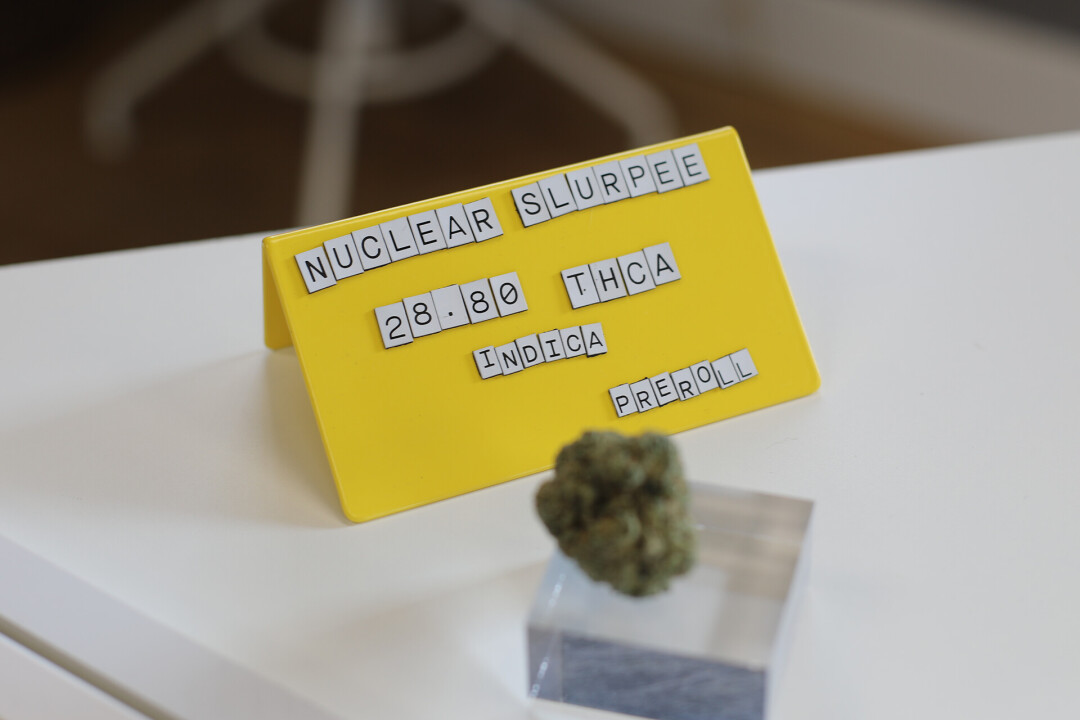
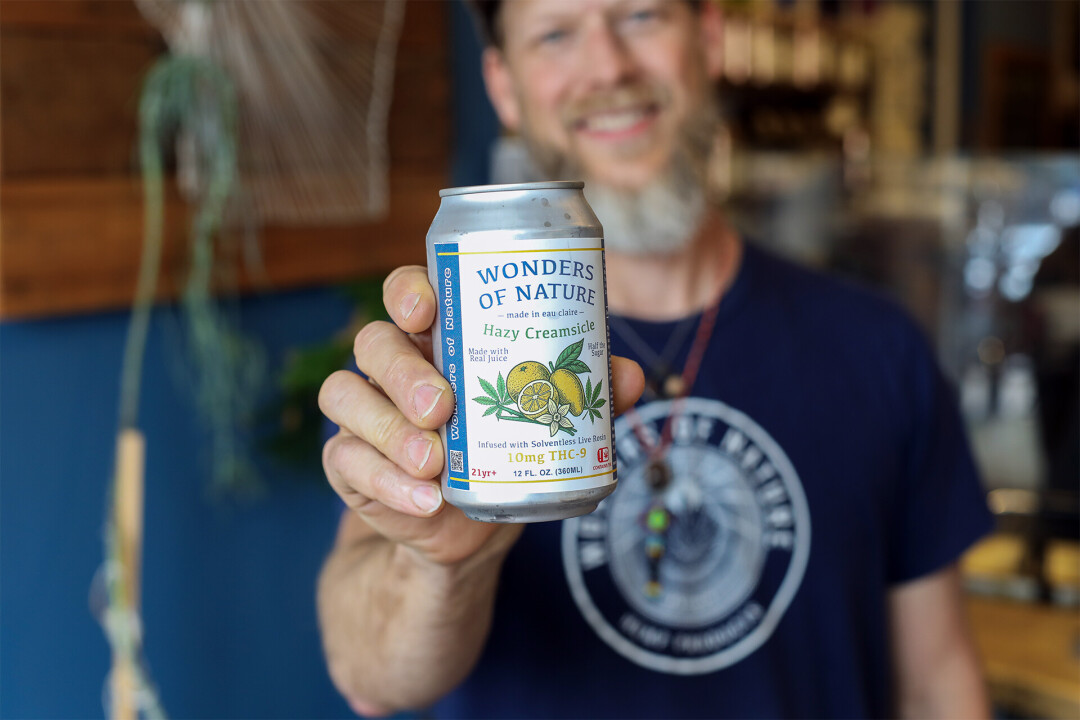
The change in federal language also effectively eliminates all of the shop's flower products, beverages, oils – even CBD pet treats.

In Wisconsin, projections show the hemp industry generates an estimated $700 million each year and employs over 3,000 residents. As reported by PBS News Hour, the forthcoming ban would reduce a growing $28.3 billion industry nationally – eliminating over 200,000 jobs overnight.
On the topic of employment, storefronts locally have already begun to let go of staff or wind down operations.
Steve’s Hemp owners Steve and Molly Hampton didn’t have any staff when the dispensary first opened its brick-and-mortar in 2022; they grew to a team of six over the years. Now, the Eau Claire business has consolidated to four workers and Wonders of Nature faces a similar situation.
Prior to news of the looming hemp ban, Steve’s Hemp sought to expand its commercial kitchen to produce products completely in-house.
“Our dream with (Steve’s Hemp) and becoming a dispensary was always to be fully vertically integrated. We want to go all the way from seed to sale,” Molly and Steve shared. “That obviously is very much halted at this point.”
“I’d say 70% of customers that come in don't really know what's going on or know about it,” Steve said. “We are trying to be as vocal as we can of what the actual facts are.”
Wonders of Nature and Steve’s Hemp both have continued to use their platforms online and in person to educate customers, lobbying orgs, state legislators and beyond.
Community members convened at Wonders of Nature on Nov. 5 for an open dialogue about the impacts of the impending federal hemp ban.
Representative Jodi Emerson (D-Eau Claire) was among the locals in attendance.
Observing a widespread sense of confusion and powerlessness among attendees, she hopes to leverage these moments and encourage a direct line of communication with the community. In “good public policy,” Rep. Emerson said, “you have to talk to the people.”
She feels that value – communication with constituents – was ignored by the legislature which voted to enact the federal hemp ban.
Emerson told Volume One the ban has become “just a cluster of issues created by a federal government who has no thought for the producers, farmers and shop owners who are literally going to lose their livelihoods.”
“When the shelves actually dry up and the closed signs go up, that’s going to be a tough one for the consumers.”
chris buske
owner, wonders of nature cafe and dispensary
Just two days before the Wonders of Nature event, Wisconsin Democrats secured a historic governing trifecta through the Midterm elections. Together, both chambers of the state Legislature and Democratic Governor-elect David Crowley may open new avenues to introduce legislation at both the state and federal levels, Rep. Emerson said.
Prior to new staff taking office in January 2027, strategic discussions are scheduled for the end of November to determine next steps for the state’s approach to hemp, Rep. Emerson added.
Such measures could focus on anything from legalizing hemp, decriminalizing or fully legalizing cannabis products across Wisconsin, or pursuing a comprehensive policy that combines all of these efforts.
Buske and Hampton point to neighboring Midwestern states, where adult-use of cannabis is legal, as potential references for how the industry could be structured in Wisconsin.
Both believe legislators should look at the past seven years – which haven't imposed heavy regulations – as evidence of the hemp industry's impact.
The Wisconsin Coalition for Cannabis Reform
Among the many nationwide advocacy groups in the hemp and cannabis industries, the Wisconsin Coalition for Cannabis Reform (WCCR) is one group advancing evidence-based research in the Badger state. The organization unites hemp businesses, growers and advocates (including those in Eau Claire and the Chippewa Valley) to push for adult regulation (21+ years of age), consumer protection and broader reform work across the country.
To achieve these goals, WCCR works with elected officials at the state and local levels to drive “meaningful policy change and (build) strong industry-government relationships.”
“Everybody has just been really busy trying to keep up with demand and get things established and understand the legalities of (hemp),” Buske said. “It’s just been a really fast-paced moving industry.”
These proprietors also acknowledge the use of excise taxes in neighboring states – similar to existing ones on alcohol and tobacco – which could potentially generate new revenue streams in Wisconsin, though it may not be a complete solution on its own.
According to state legislators, consumers across the country rely on consumer hemp products for their health and wellness. If provisions from the Hemp Guardrails Act authored by Sen. Sheehy and Sen. Klobuchar were secured, qualifying hemp-derived CBD products would be protected.
Plus, the bill would preserve state authority to enact stricter hemp regulations if desired.
If and when the ban takes effect, no matter what possibilities could be on the horizon, these businesses will not be allowed to operate as is. Yet, how the ban will be enforced come Dec. 11 remains unclear.
“I feel like Wisconsin could be taking advantage of the tax revenue on these products and that could help,” said Katy Taylor, an Eau Claire resident and customer of Wonders of Nature.
“I am a working adult, I am a graduate student. Having a way to de-stress after my work and my studies – that’s important to me,” she continued. “I don’t know what to do … there is not going to be an option for me as of December.”
When the national ban on hemp products takes effect, at least four local storefronts operating right in downtown Eau Claire face immediate closure.
Other Chippewa Valley businesses such as Azara Smoke N Vape, Truckers Union and Calm & Collected Cannabis Co. don’t plan on closing but will pivot their product offerings.
Whether you count yourself among the regular patrons of local THC dispensaries or not, the physical absence of these Eau Claire storefronts following the Dec. 11 ban will leave a noticeable void.
“I love what we’ve established here in the café (and) for the community,” Buske said. “When the shelves actually dry up and the closed signs go up, that’s going to be a tough one for the consumers.”
“I’m hoping for the best, I’m expecting the worst (and) I’m preparing my customers,” he said.
This is a developing story with updates to come from Volume One. Learn more about hemp retailers in the Chippewa Valley through Volume One’s “CBD Scene” mini site (www.volumeone.org/sites/cbd).
Visit www.myvote.wi.gov and enter your address for a list of all Chippewa Valley and Wisconsin elected officials who represent you.

PUBLISHER / EDITOR / OWNER
Nick Meyer
Staff • Contributors • Careers
Have questions? Email us: • editorial@volumeone.org(Editorial,) • web@volumeone.org(Website,) • manager@thelocalstore.org(Store,)
Terms of Use / Privacy Policy | ©2002-2026 Copyright Volume One Magazine


