City of Eau Claire Closes $2M Deficit In Proposed Budget
2027 draft budget balanced thanks to 'scalpel approach,' takes cautious staffing strategy and shows investment in economic development
McKenna Scherer, photos by Andrea Paulseth |
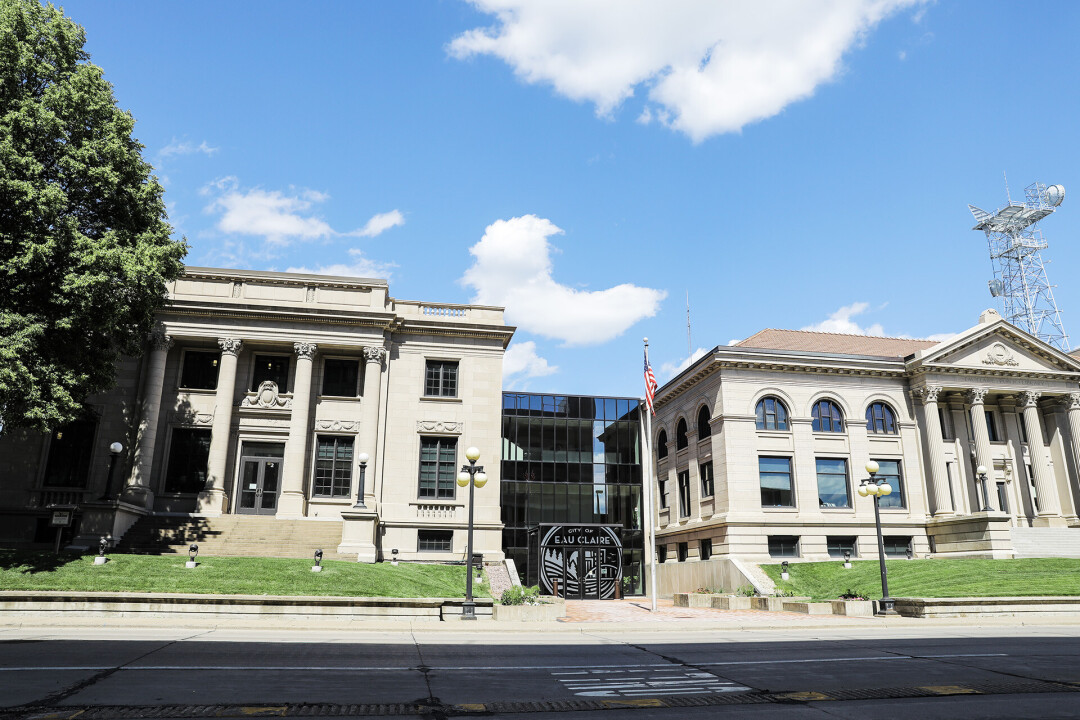
The City of Eau Claire’s budgetary woes aren’t unique to the municipality, but that didn’t make its anticipated $2 million-plus operating budget deficit any easier to swallow. After roughly nine months of City staff efforts, the proposed 2027 budget is balanced and awaits City Council approval.
As Volume One has previously reported, the operating budget document itself is dense and has crossed the 200-page mark before. Now available for public review online, the budget is divided into 13 sections and includes explanation of funding organization, notes “significant changes” and more.
Among those changes is the City’s decision to leave 10 currently vacant positions unfilled, to save on payroll expenditures. Those include one fiscal associate, building inspector, deputy city manager (a position current City Manager Dave Solberg held before this spring) and others.
“We have been successful in balancing our 2027 budget and have plans for success in 2028 without position reductions at this time,” Finance Director Kitzie Winters said, noting there are not plans for further employment reductions at this time.
Community Feedback Event
From 5-6:30pm at the L.E. Phillips Senior Center (1616 Bellinger St., Eau Claire on Tuesday, Oct. 20, City Manager Dave Solberg and Finance Director Kitzie Winters will share a public presentation on the 2027 operating budget. They are seeking community feedback and are open to answering questions.
It is also unlikely many new employment opportunities will emerge over the next several years, except for emergency services departments which “have a need for staffing increases to meet growing community demand and calls for service.” The City is financially planning for that to occur within the next five years.
Still, without wider-scope funding reform at the state level, Winters said, the budgetary path ahead is likely to remain a difficult one. For now, the 2027 operational budget has been balanced.
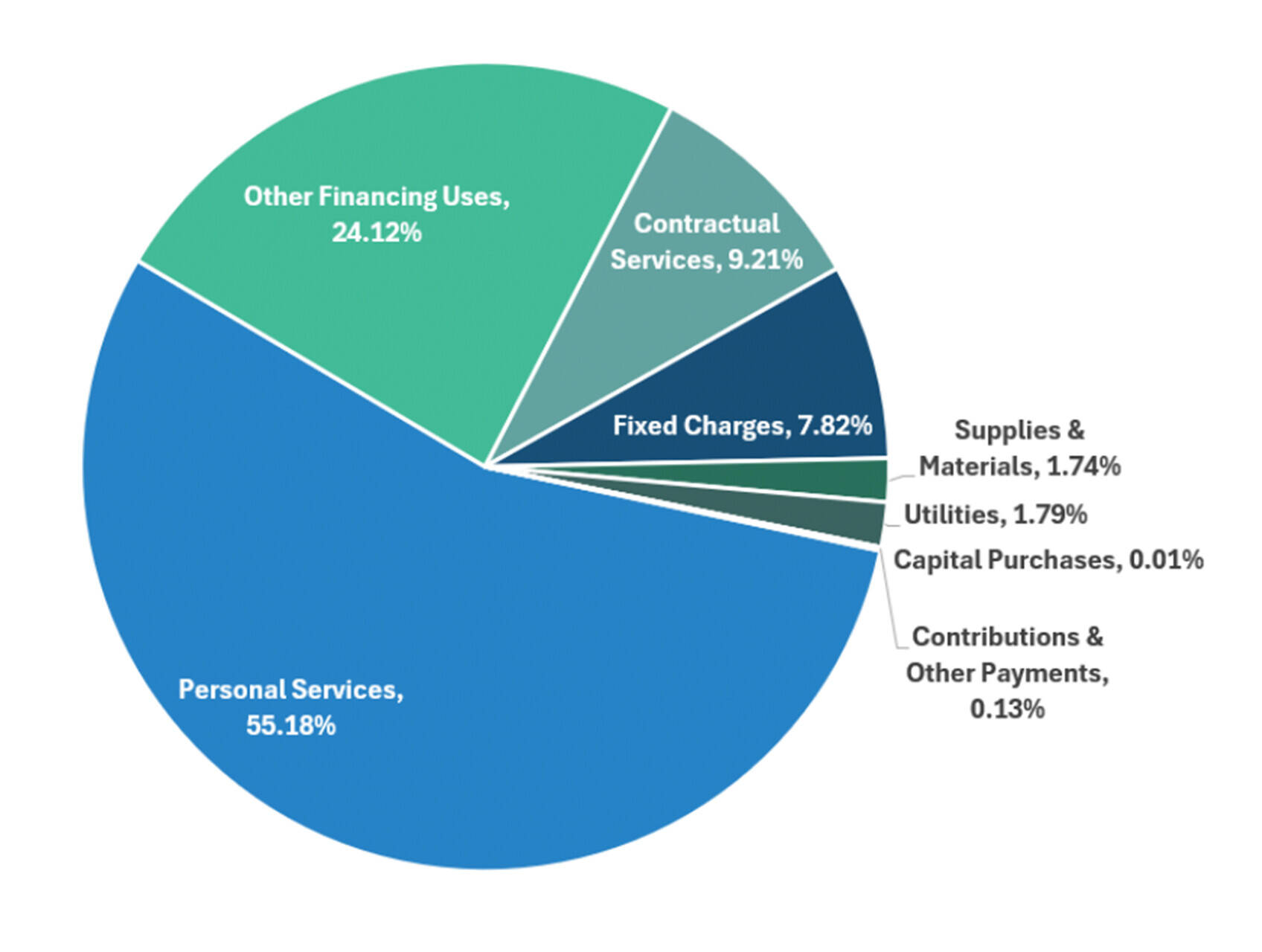
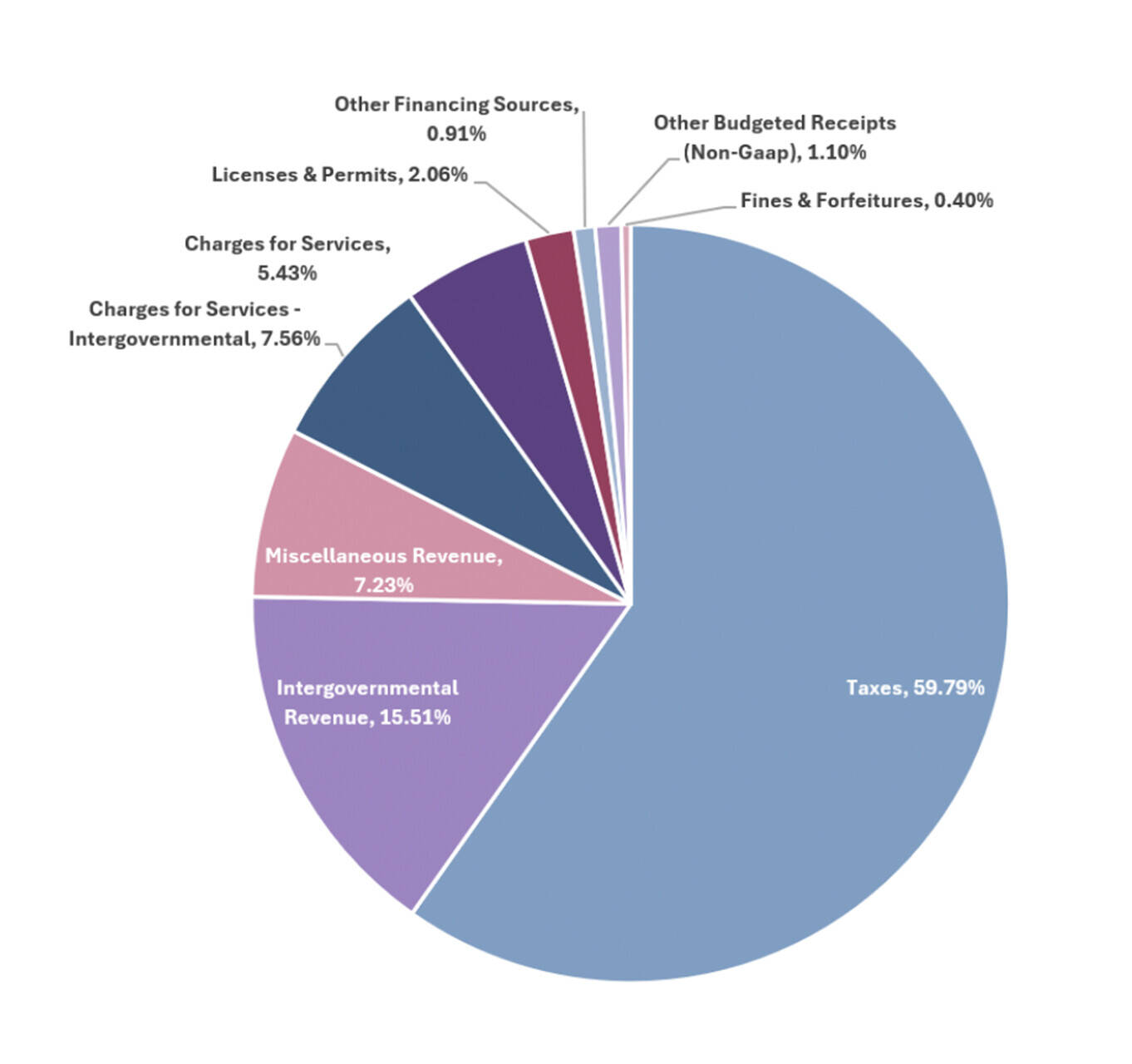
More Funding For Economic Development, Community Enhancement, Cemetery Maintenance & Others
At the top of the budget documents, a quick rundown of proposed “significant changes” are highlighted.
The biggest slice of the annual operating budget goes toward the General Fund – which provides services like police and fire protection, street repairs and snow plowing, park maintenance, rec programs and more – and proposes $103 million for its 2027 budget. (That’s on par with its 2026 budget, which had $100 million.)
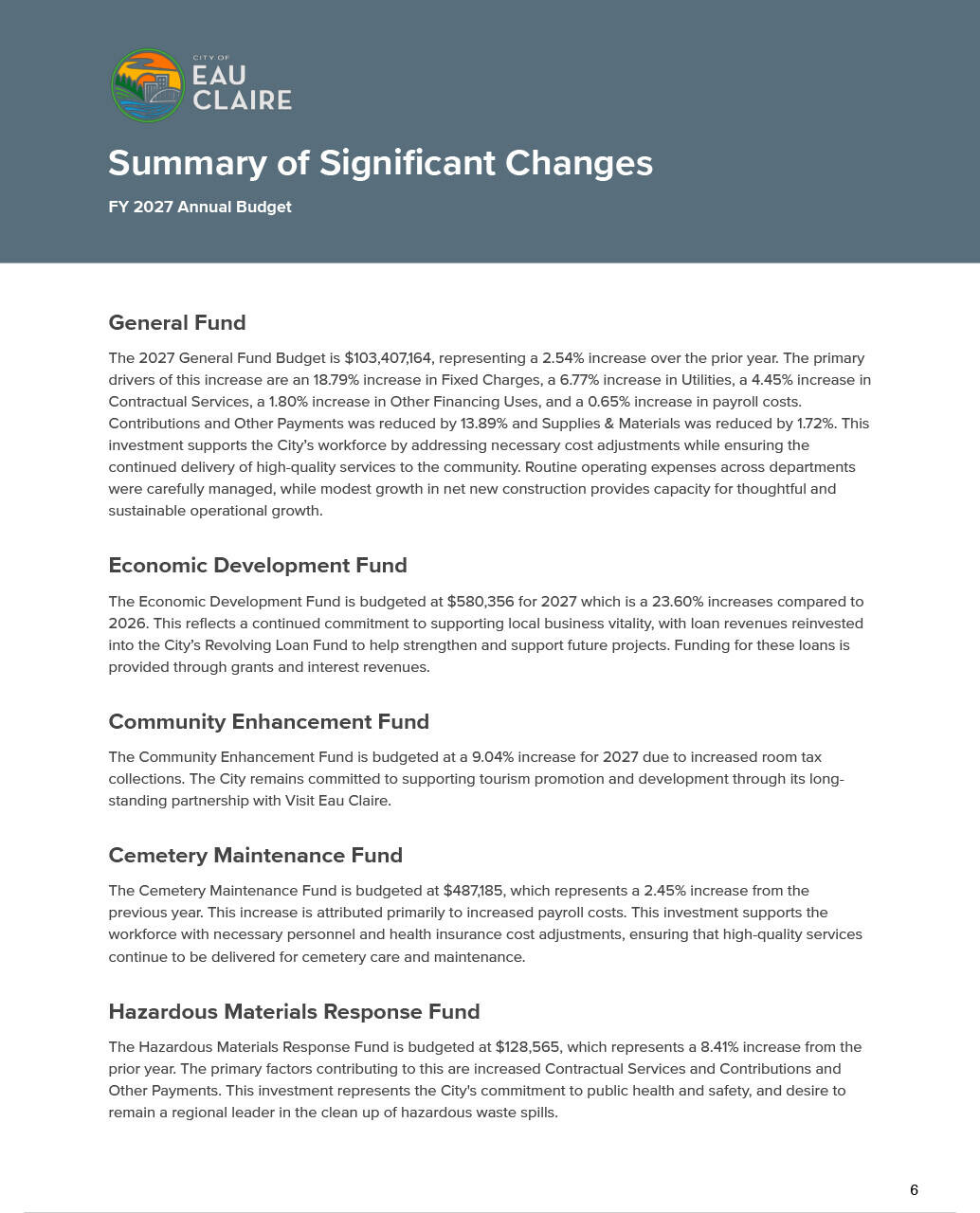
The Economic Development Fund may see the largest increase of funding as part of the 2027 operating budget. The proposal puts just over $580,000 toward the Economic Development Fund – a 23.6% increase compared to 2026.
The budget document states the increase is intended to reflect “a continued commitment to supporting local business vitality.”
Notably, Wisconsin municipalities are fairly limited in the ways they can increase revenue, per state law. One way local governments can see their funding from the State grow, is by seeing net new construction.
“A municipality is allowed to increase its levy over the amount it levied the prior year by the percentage increase in equalized value from net new construction,” the League of Wisconsin Municipalities explains. “If no new construction occurred in your community, then your allowable levy increase is zero percent.”
Parking & The “Non-Departmental” Division
Organizations and efforts which benefit the city but are not necessarily departments within the local government – like the L.E. Phillips Senior Center and Downtown Eau Claire Inc. (DECI) – now find their allocated monies under the “Non-Departmental” fund.
City staff used to be part of DECI, downtown Eau Claire’s advocacy and marketing organization, until the two entities formally separated in 2024.
DECI still sees funding from the City – for most of the org’s 20-plus year history, annual funding often totaled around $80,000 – but its relationship has changed. Earlier this fall, DECI Executive Director Erin Klaus expressed concern over that funding uncertainty.
For 2027, DECI requested City funding of $85,000. Per the current proposed documents, the City has budgeted for a $50,000 allocation.
As it relates to parking – a continuously contentious local topic – folks may find specific budgetary information in both the Streets Operations and Parking Utility funds.

The streets division covers “the repair and maintenance of over 358 miles of city streets,” including snow control, chip deal and micro-surfacing, mowing and more.
The Parking Utility fund focuses on the “operation and maintenance of the downtown parking ramps, City-owned surface public parking lots and on-street parking.” Parking personnel are charged with enforcement of the new downtown paid parking program.
The (Proposed) 2027 Budget Is Balanced. Now What?
“That is a great question,” Winters said, when asked how the City will keep the budget balanced, or chip away at it further, moving forward. “The answer can flow with different years and economic factors.
“To put into numbers, we started out with a $2.4 million deficit to continue with 2026 operations and received $892k in net new construction increase to property taxes,” she said.
If construction growth were to halt, the City would focus on maintaining its fee schedule in relation to household inflation (or the CPI, Consumer Price Index). Then, if necessary, the City would evaluate what services it provides that may no longer meet community needs or strategic goals and pare them down.
“My philosophy is a scalpel approach rather than a ‘straight across the board’ percentage reduction in expenses. Department Directors all come together to work on balancing a budget and offer solutions,” Winters said.
The bigger picture, she explained, could include the City to consider combining services with Eau Claire County or other, smaller municipalities like the City of Altoona which may want to partner with the City.
“At the same time, we are working on fiscal long-term plans, partnering and working with legislators for a sustainable plan,” she said.
From 5-6:30pm on Tuesday, Oct. 20, Solberg and Winters will hold a public presentation on the 2027 operating budget – seeking community feedback and to answer questions – at the L.E. Phillips Senior Center (1616 Bellinger St., Eau Claire).
City council will also continue discussing the proposed operating budget at its forthcoming meetings, with aims to approve the final version before end of November.
View the proposed 2027 operating budget on the City of Eau Claire website • View the city council's schedule online


