

DECI Qualifies for Wis. Main Street Program, Budget Concerns Slow Process
downtown org's application is in limbo as City of Eau Claire continues 'non-stop' work on balancing budget, serves as one example of budget's potential ripple effects
McKenna Scherer, photos by Andrea Paulseth |
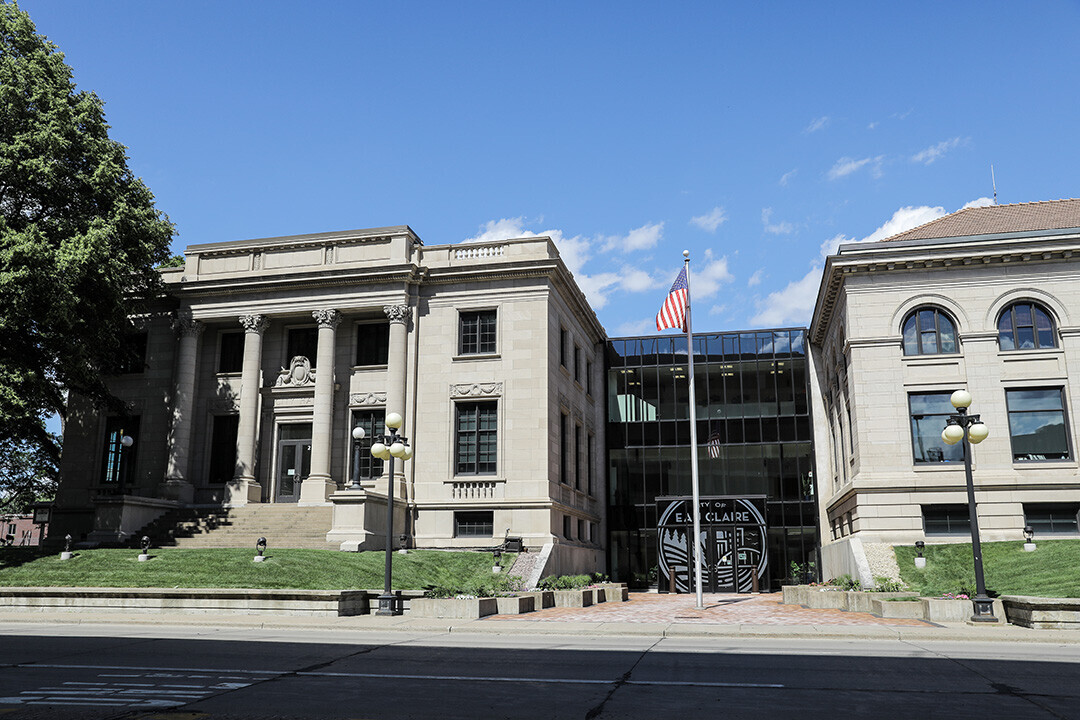
The City of Eau Claire’s forthcoming 2027 budget has been a hot-button topic for at least the past year, since it announced an anticipated deficit of about $2.2 million.
While certainly not unique to Eau Claire, its budget challenges put both the City and residents face-to-face with a tough situation and question: Should the City cut services in order to scale its expenditures back, or ask residents to pay more in support of them?
The annual operating budget document itself is a behemoth – last year, it passed the 200-page mark – and spans the multiple funds which allow the City to function. It's created by a swath of City staff, who spend months working on it, before being introduced to City Council. That introduction is typically conducted in October each year, with potential changes and ultimate approval occurring before the end of November.
The largest portion of the operational budget – which, overall, was roughly $198 million in 2026 – goes toward the core General Fund.
The General Fund allocates money towards key municipal services like the Eau Claire Police Department (ECPD) and Fire Department, streets operations, parks and recreation and more.
In 2026, it made up over half the budget – about $100 million of it.
Other funds part of the operational budget include the Enterprise Fund, which supports utilities, public transit and City-owned facilities like Hobbs Ice Center; Internal Services and Debt Services funds; the Special Revenue Fund.
The City's Special Revenue Fund allocates money toward specific services or programs outside of the General Fund, debt or capital projects. Services and departments who utilize this funding include the City-County Health Department, cemetery maintenance, the public library, the ECPD K-9 unit, economic development and the Downtown Fund.
The latter has been the largest funding source for Downtown Eau Claire Inc. (DECI), the local nonprofit founded in 2002 to put specific efforts toward the support and revitalization of the downtown area.
This could change, come the City’s 2027 budget allocations.
DECI’s Relationship With The City Of Eau Claire
For 22 of its 24 years of existence, DECI straddled the public-private divide, created as a separate 501(c)(6) nonprofit, but with explicit ties to the City. For most of its history, its executive director was also the City’s economic development director (formerly Mike Schatz, currently Aaron White).
In 2024, DECI moved to formally separate from the City, which went into full effect in 2025. DECI appointed a non-City employee as its executive director – Erin Klaus, owner of Tangled Up In Hue, one of downtown’s longest operating small businesses – and adopted new bylaws.
DECI is one of many organizations and services which will likely see shifting financial allocations from the City as it tackles its deficit.
That move also opened DECI up to an opportunity neighboring downtown organizations, like those in Chippewa Falls and Menomonie, have long taken up: participation in the state’s Main Street program.
Operated by the Wisconsin Economic Development Corp. (WEDC), the Main Street program was created in 1987. It supports the revitalization and success of downtown communities across the state by way of staff training, strategic planning assistance and – importantly – more opportunities to secure grant funding.
By becoming a fully independent organization, DECI was able to partake in the year-long qualification process all downtown communities must undergo before applying for Main Street consideration.
DECI completed that process over the past year (a topic discussed at a public event in February this year, entitled “The Future of Downtown.”)

Budgetary prerequisites are among several requirements participants must meet in order to be considered for and continue being part of the program. For communities with populations of 5,000 or more, participating organizations must have an annual budget of at least $70,000.
Right now, the nonprofit meets that requirement. However, if the City decides to roll back its annual contribution to DECI – in an effort to slim down its 2027 operational budget – the downtown events and advocacy org may no longer qualify for the Main Street program.
DECI is one of many organizations and services which will likely see shifting financial allocations from the City as it tackles its deficit.
Back in 2024, DECI board members told Volume One they understood both the opportunities and challenges its restructuring would likely bring, including “shoring up the organization’s finances.”
A Balancing Act For The City
Since its founding in 2002, DECI has received no less than $72,000 and as much as $99,000 from the City annually from the Downtown Fund.
From 2008-2025, that figure was always between $80K and $85K. Yet, that was when the City of Eau Claire had its own staff member as part of DECI and took working hours into account.
When asked about the City’s potential contribution to DECI as part of the 2027 budget, Finance Director Kitzie Winters said, “You are correct, that now that DECI has separated from the City, this is classified (solely) as a contribution within the budget.
“In prior years we had a (percentage) of an employee through the City that worked on DECI related items.”
The City's own individual departments have been asked to make budgetary reductions or hold open job positions “to reconcile our budget,” Winters said.
City Manager Dave Solberg also noted the complex balancing act between “expenditures that help give the City culture and fun” while being “cognizant of the required services that we must provide to the residents.”
The City's own individual departments have been asked to make budgetary reductions or hold open job positions “to reconcile our budget,” Winters said.
Staff will continue to work on the budget – as they have “almost nonstop” this year, Solberg said – through at least September and until its introduction to city council in October.
Looking Ahead
Looking ahead, Klaus said DECI does not know what amount it can expect from the City (DECI requested $85K from the 2027 City budget, Kitzie said). That essentially puts DECI’s Main Street application process in a self-imposed limbo period for the time being.
DECI’s budget is not solely reliant on funding from the City. Its three main funding sources include the City (historically $80K-$85K), the downtown Business Improvement Districts it supports (roughly the same amount as the City) and events revenue.
“We recognize that there are many competing demands for public dollars and we are actively working to diversify DECI’s revenue,” Klaus told Volume One.
“Our goal is not to rely exclusively on City funding. Our goal is to establish a sustainable and predictable base of annual support that allows DECI to responsibly plan, leverage other investments and continue building an organization that can serve downtown for the long term,” she said.
DECI's predicament, while unique on a few levels, also serves as one example of the ripple effects a city's operating budget can have on the many services and orgs which lean on funding from it.
The City of Eau Claire will present its 2027 operating budget proposal to City Council in early October. The council's bi-weekly public meeting agendas are shared days in advance, online.