



National 'State of Local News' Report Names Volume One Among Country's 'Bright Spots'
Northwestern University’s Medill Local News Initiative researches the local news landscape – and spotlights 'promising' organizations
The first State of Local News report, published in 2016, used data from 2005 and onwards to evaluate the United States’ local news landscape. Every year since then, the project has continued to evolve alongside the media industry, and track what has been a decades-long industry contraction. The 2026 report from Northwestern University’s Medill School of Journalism was published a few weeks ago, and locals will find a familiar name in it: Volume One. (Click here to read their profile on V1.)
If you’re not part of the news media industry (and, to be fair, plenty of locals don't really think of V1 as “the news” either), you may be unfamiliar with just how expansive yet comprehensive – groundbreaking, really – the State of Local News project is.
It tracks the country’s local journalism systems from newspapers to television, to digital-only news sites and nonprofits. It identifies and records “news deserts” – a term the report helped popularize; labels for counties that don’t have at least one reliable local news source, which Dunn County used to be considered part of – media consolidation and closures, employment, evolving technology and more.
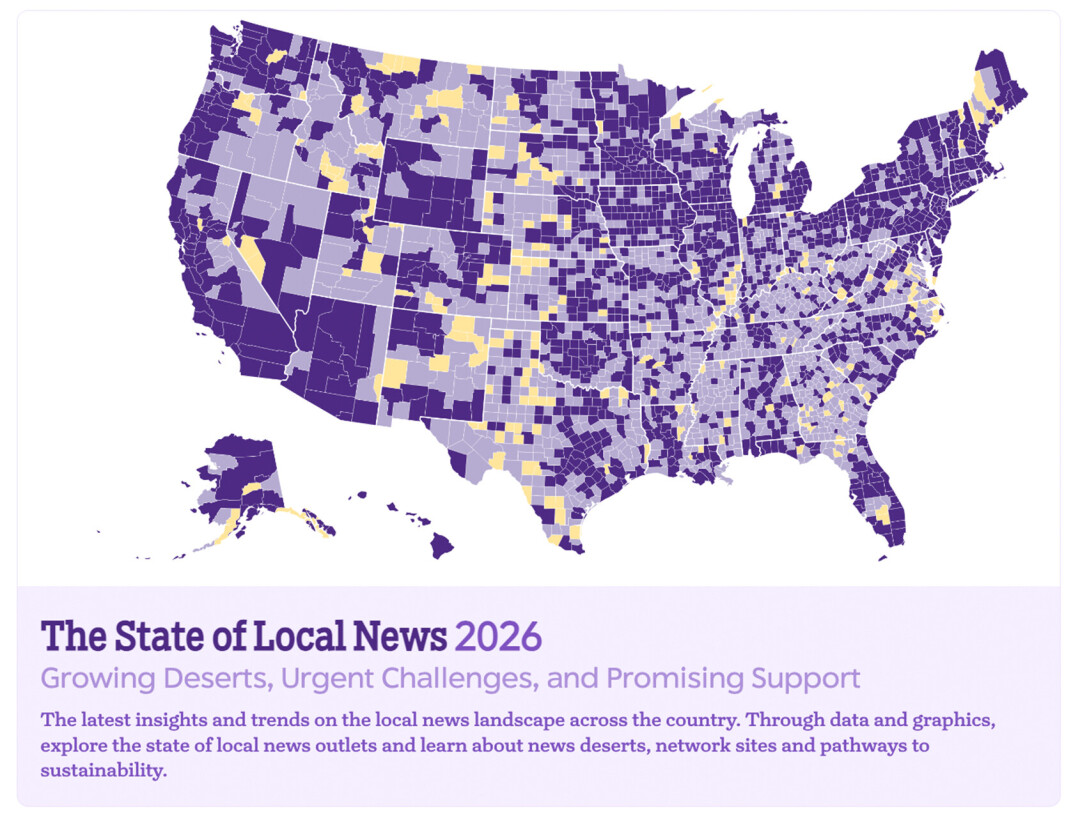
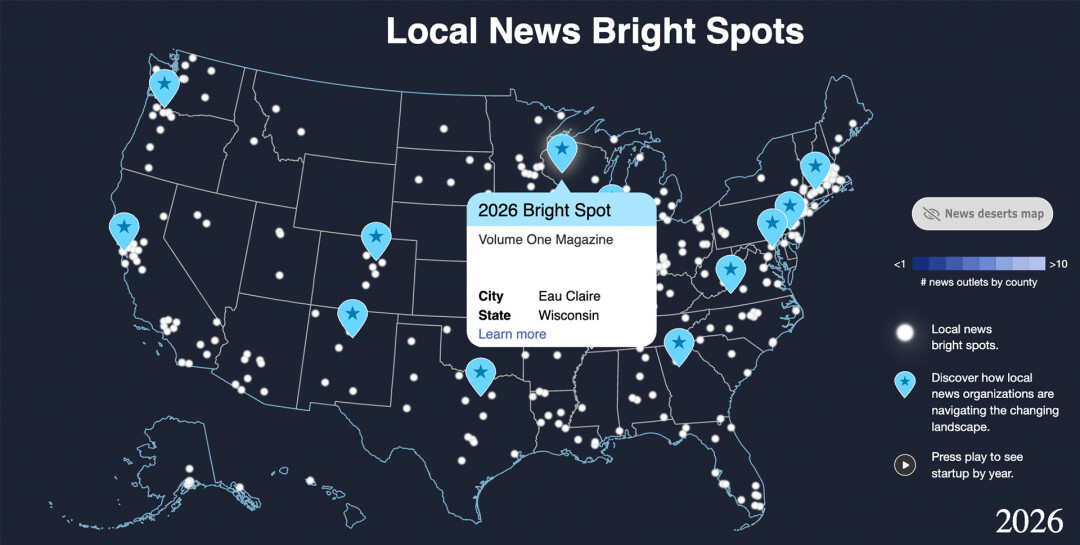
As you might imagine, this kind of ongoing research – culminating in the “State of Local News” report each year – isn’t overwhelmed by rainbows and sunshine. But it’s not all dreary despair, either. The report also looks at what engagement with readers/viewers in the 21st century looks like, how local media are finding sustainability, and even points to promising projects they call “Local News Bright Spots.”
After evaluating some 50-plus nominations, the Medill Local News Initiative team thought Volume One was doing something just odd enough – it's oddly built (why are we also connected to a retail shop and trolley company?), oddly active (how are we also doing so many community events?) and maybe even oddly... successful? – that other local news orgs might find inspiration from it all.
The dozen other Bright Spots are print newspapers, nonprofits, digital-only orgs, or a mishmash of things, all finding paths forward in their own style.
Success, in these cases, doesn’t necessarily mean having a big staff, through-the-roof revenue, or having the most eyeballs on your work. But by comparison, Volume One is almost certainly the weirdest of the Bright Spots bunch.
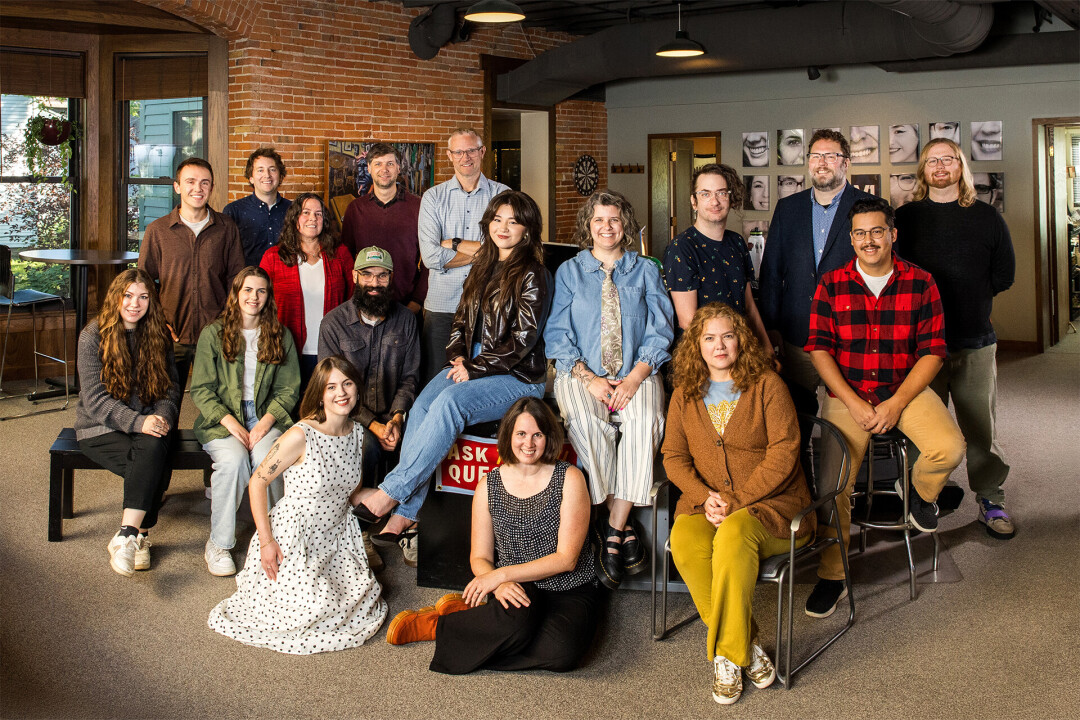
Volume One’s “newsroom” isn’t a traditional newsroom, and technically, there are 3.5 editorial staff (one part-time photographer, one listings editor, two journalists and editors), though many more creative folks on our team contribute to our content. We’re independently owned with no investors, with no subscription fee for our print magazine or paywall for our website, and we’re tied to a local retail store, trolley company, and e-bike rental service.
And did I mention we’re putting out a hyper-local, biweekly print news product, for free, in 2026?
The only logical reason any of it works… is because of this place, this community. Somewhere along the way, we did enough things right that even when we’ve hit a bump in a road here or there, the Chippewa Valley has continued supporting us. That relationship feels more and more special – maybe even rare – with each year that passes.
In March 2002, a black-and-white zine called Volume One, made by a bunch of 20-somethings, hit downtown Eau Claire. Looking down the barrel at our 25th anniversary – in 2027, in case you were wondering – it feels pretty good to be called a “bright spot” in the local news landscape.
BY THE NUMBERS: The 2026 State of Local News Report
8,400
The approximate number of news outlets that make up the American local news ecosystem. (About 5,400 newspapers; 1,900 digital-only news sites; 300 public broadcasters; 670 television newsrooms.)
95%
Across the United States' total population, this is the percentage of people who live in a county with at least one newspaper.
170
The number of newspapers that closed or merged in the past year (a rate of nearly three per week).
26
The number of news deserts that emerged over the past year – the largest single year increase during the Medill Local News Initiative team's research. That brings the total up to 238 counties that qualify as news deserts. (For comparison, last year's report saw an increase of six counties.)
10
That's how many companies control nearly 75% of all local commercial TV newsrooms. On that top 10 list, Gray Media – which owns WEAU 13 News – is No. 1.
View the 2026 State of Local News report and project, and its "Bright Spots" profile on Volume One, online • The Medill Local News Initiative is led by Northwestern University’s Medill School of Journalism, Media, Integrated Marketing Communications


