In The Fall, Canning Often Gets The Glory. This Season, Try Out Fermenting!
talking fermentation – and sharing a beginner-friendly recipe – with local holistic and functional nutritionist, Tammie Delveaux
McKenna Scherer, illustration by Anna Lynch |
Entrepreneurs of all stripes are often born from the same realization: A thing that they want – be it a place, product, service, or something else – isn’t available or accessible to them, so they decide to create it themselves.
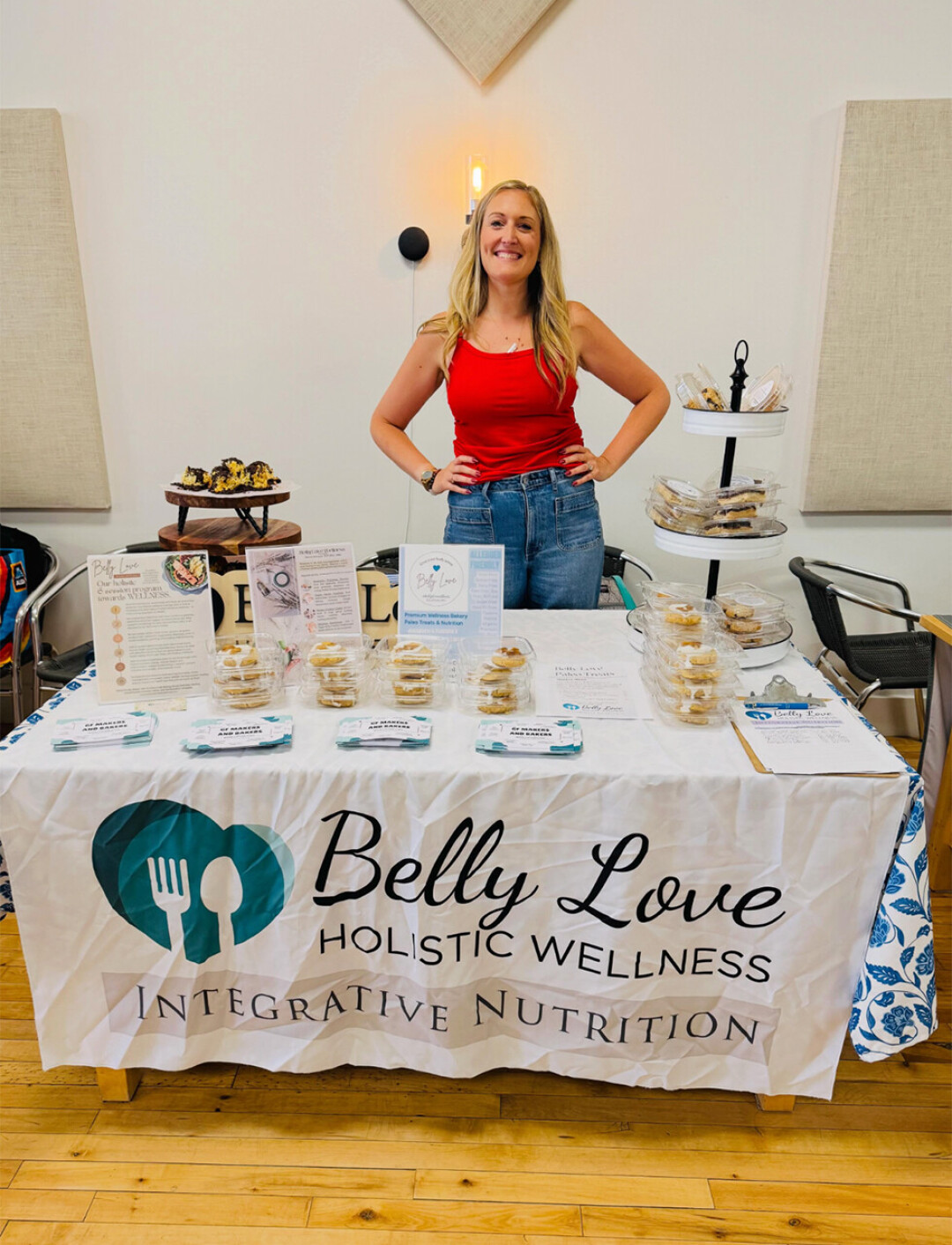
Such is not, exactly, the case for local Tammie Delveaux. Her business, Belly Love Holistic Wellness, was not exactly founded out of a desire to create something new, but from her lived experience facing a “formidable trio” of autoimmune diseases.
“Living with celiac disease, Crohn’s disease and ankylosing spondylitis forced me to look at food differently,” Tammie said. “Instead of only asking, ‘What foods do I need to avoid?” I became much more interested in, ‘What foods can I add that help nourish and support my body?”
“That philosophy has really become the heart of Belly Love Holistic Wellness,” she continued. “I want people to understand that eating for their health doesn’t have to mean bland, boring, or restrictive foods. Food can be therapeutic and incredibly joyful at the same time.”
“One of my favorite things about fermentation is that it reconnects us with our food. We're so accustomed to food being identical every time we open a package, but fermentation is alive and dynamic."
TAMMIE DELVEAUX
FUNCTIONAL & HOLISTIC NUTRITIONIST, FOUNDER OF BELLY LOVE HOLISTIC WELLNESS
The Chippewa Falls native earned her bachelor’s degree from the University of Wisconsin-Eau Claire in education before becoming an accredited practitioner in functional and integrative nutrition.
Certified in holistic nutrition by the National Association for Nutrition Professionals, Tammie offers health and wellness expertise through one-on-one sessions, cooking classes and workshops and more.
Earlier this fall, Tammie led locals through a beginners-friendly fermentation workshop at the Menomonie Market Food Co-op in Eau Claire. While attendees were able to learn in-person from Tammie – and leave with their own ready-to-ferment canned foods – we reached out to her to offer Volume One readers the next best thing: a beginner-friendly fermentation rundown and recipe.
V1: For readers who may not know, what does it mean to be a holistic and functional nutritionist?
TD: “Holistic and functional nutrition really means looking at the whole person rather than focusing on one symptom or diagnosis in isolation. Food is obviously a huge part of what I do, but nutrition doesn’t exist in a vacuum. Digestion, blood sugar, sleep, stress, nervous system health, movement, hydration, environmental exposures, nutrient status, and our relationship with food can all influence how we feel.”
V1: Where does fermentation come into play for you, either personally or professionally? What foods are you fermenting?
TD: “Fermentation fits beautifully into that philosophy because it is one of the oldest ways humans have transformed and preserved food – and it can make something as simple as sa cabbage or carrot incredibly flavorful.
“At home, I love fermenting vegetables, especially whatever is abundant and seasonal. Cabbage is probably the classic example, but carrots, radishes, green beans, asparagus, garlic, and other vegetables can all be wonderful fermented. I also love experimenting with herbs and spices like dill, garlic, mustard seed, coriander, caraway, peppercorns, and red pepper flakes.
“It’s also such a great way to honor our local food supply. When gardens and farmers markets are overflowing with produce, fermentation allows us to preserve some of that abundance rather than letting it go to waste. There is something really special about using a traditional process to capture the flavors of the season and enjoy them later.
“Through Belly Love, I also love teaching fermentation because it makes something that can initially sound intimidating feel very approachable. You don't need a fancy laboratory or complicated equipment. People have been fermenting food successfully for thousands of years!”
“It’s also such a great way to honor our local food supply. When gardens and farmers markets are overflowing with produce, fermentation allows us to preserve some of that abundance rather than letting it go to waste.”
V1: What exactly is fermentation?
TD: “At its simplest, fermentation is a process in which microorganisms transform components of food. With the vegetable fermentation I teach, we’re typically talking about lacto-fermentation.
“Despite the name, lacto-fermentation has nothing to do with dairy or lactose. Naturally occurring lactic-acid bacteria utilize sugars in the vegetables and produce lactic acid. That increasing acidity helps preserve the food while creating the tangy, complex flavor we associate with fermented vegetables.
“It’s actually pretty amazing – you’re creating an environment that encourages beneficial microbes while making it increasingly difficult for many undesirable organisms to thrive.”
V1: Is fermented food good for you?
TD: “Fermented foods can absolutely be part of a healthy diet. Depending on the food and how it is prepared, fermented foods can provide live microorganisms and fermentation byproducts, and they can add diversity to the diet. That can be particularly interesting when we think about the gut microbiome – the enormous community of microorganisms living in and around our digestive tract.
“I do think it’s important not to portray fermented foods as a magic cure, though. Gut health is much bigger than eating sauerkraut! I think of the fermented foods as one tool within a diverse, whole-food diet.
“And more isn’t necessarily better. Some people tolerate fermented foods beautifully, while others – particularly those with certain digestive issues or sensitivities – may need to start with very small amounts or may not tolerate them well at a particular point in their health journey.”
“I do think it’s important not to portray fermented foods as a magic cure, though. Gut health is much bigger than eating sauerkraut! I think of the fermented foods as one tool within a diverse, whole-food diet.”
V1: Can you offer a beginner-friendly fermentation food or recipe?
TD: “I would start with a simple jar of fermented vegetables. Cabbage and carrots are especially forgiving for beginners, and you can customize the flavor once you understand the basic process.”
ONE-JAR RECIPE: Fermented Cabbage & Carrots
Ingredients:
- Green or purple cabbage
- Carrots
- Non-iodized salt
- Filtered water, if additional brine is needed
- A clean glass Mason jar
- Optional: garlic and fresh dill
Preparation, as described by Tammie Delveaux:
“Thinly slice the cabbage and carrots. Add salt and gently massage the vegetables until they begin releasing their own liquid. Pack everything firmly into a clean Mason jar so the vegetables are underneath the liquid. If there isn't enough liquid to completely cover them, you can add an appropriately salted brine.
“The biggest rule of vegetable fermentation is: keep the vegetables submerged beneath the brine. Fermentation is happiest below the surface, while exposure to oxygen increases the chance of unwanted mold or yeast developing on top.
“Leave some headspace because fermentation produces gas, and if you're using a regular Mason jar rather than an airlock, you'll want to briefly “burp” the jar as pressure builds. Let it ferment at room temperature away from direct sunlight and start tasting it after several days. When you love the flavor and acidity, move it into the refrigerator to dramatically slow the fermentation process.
“And don't be afraid of the bubbles! Seeing bubbles and smelling that pleasantly sour, tangy aroma are signs that something very cool is happening inside your jar.”
“One of my favorite things about fermentation is that it reconnects us with our food. We're so accustomed to food being identical every time we open a package, but fermentation is alive and dynamic. Temperature, time, vegetables, seasonality, and microorganisms all play a role. It encourages us to slow down, use our senses, and participate in the transformation of our food.”
This Q&A has been lightly edited for publication • Learn more about Belly Love Holistic Wellness online at www.bellyloveholisticwellness.com or reach out to Tammie Delveaux directly via email (tammiedelveaux@gmail.com) • Keep up with Tammie and her business through Facebook and Instagram