

Inspired By Historic Textiles, Eau Claire’s Rylee Oberg Unveils The Silver Maple Bride
commissioned by the Wisconsin Historical Society, maple seeds and lace from home help shape meticulously crafted bridal look
“I have learned, as someone who’s been around creators a lot in my life, to not impose any thoughts on them or their process,” Tamara Funk, a Wisconsin Historical Society (WHS) curator, told me.
That sentiment was royally affirmed over the course of a year-long collaborative project between the WHS and University of Wisconsin-Madison’s Textiles & Fashion Design program – the fruition of which occurred weeks ago in mid-August.
Titled “Inspired!”, the summertime events series spotlighted a vast collection of textiles stewarded by the WHS and housed within the State Archive Preservation Facility.
Embroidery and sewing workshops encouraged the public get hands-on with textiles history while close-up tours at the capital city’s preservation facility unveiled thousands of pieces from WHS’s rare clothing collections.
Last spring, long before those recent buzzy summertime events were fully planned, two emerging fashion and design students (now graduates) – Olive Boté and Eau Claire’s Rylee Oberg – were tasked to bring select archival garments into the modern era by way of their own handiwork.
The prompt was surprisingly simple, but broad: Presented with ten archival clothing pieces, pulled by Funk based on the students’ own interests, select two which will be clear reference points to a newly-constructed outfit.
“It could be any combination of pieces,” Jenny Pederson, WHS public programs manager, said during a joint call with Funk and myself. “We also didn’t want to specify too much, like saying ‘avoid this’ or ‘not this style.’ ”
That much room to play can be paralyzing, coming into the project as a college student used to clear asks and expectations. Oberg herself was somewhat stumped, until she took a walk under the right stretch of trees.
“Last spring I was approached with the project and over that summer I was walking around, not sure what I would do with all that freedom,” she said. “Then, there were all these really beautiful helicopters — maple seeds — on the ground. They were the prettiest magenta pink.
“I noticed all these color variants in the maple seeds gathered on the ground and falling from the sky,” she recalled. “I thought, ‘I need to something with these.’ They became the perfect vehicle for my project.”
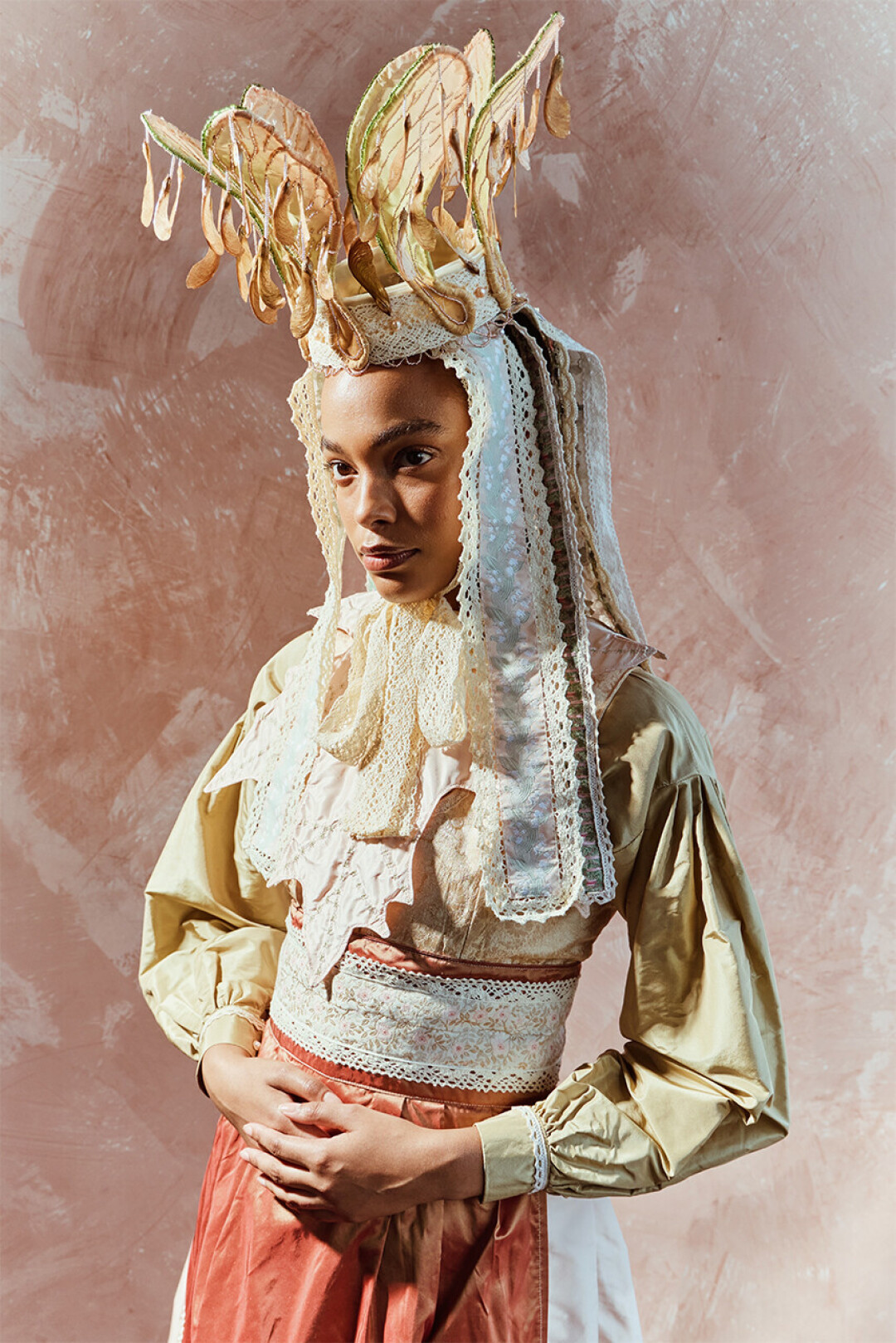
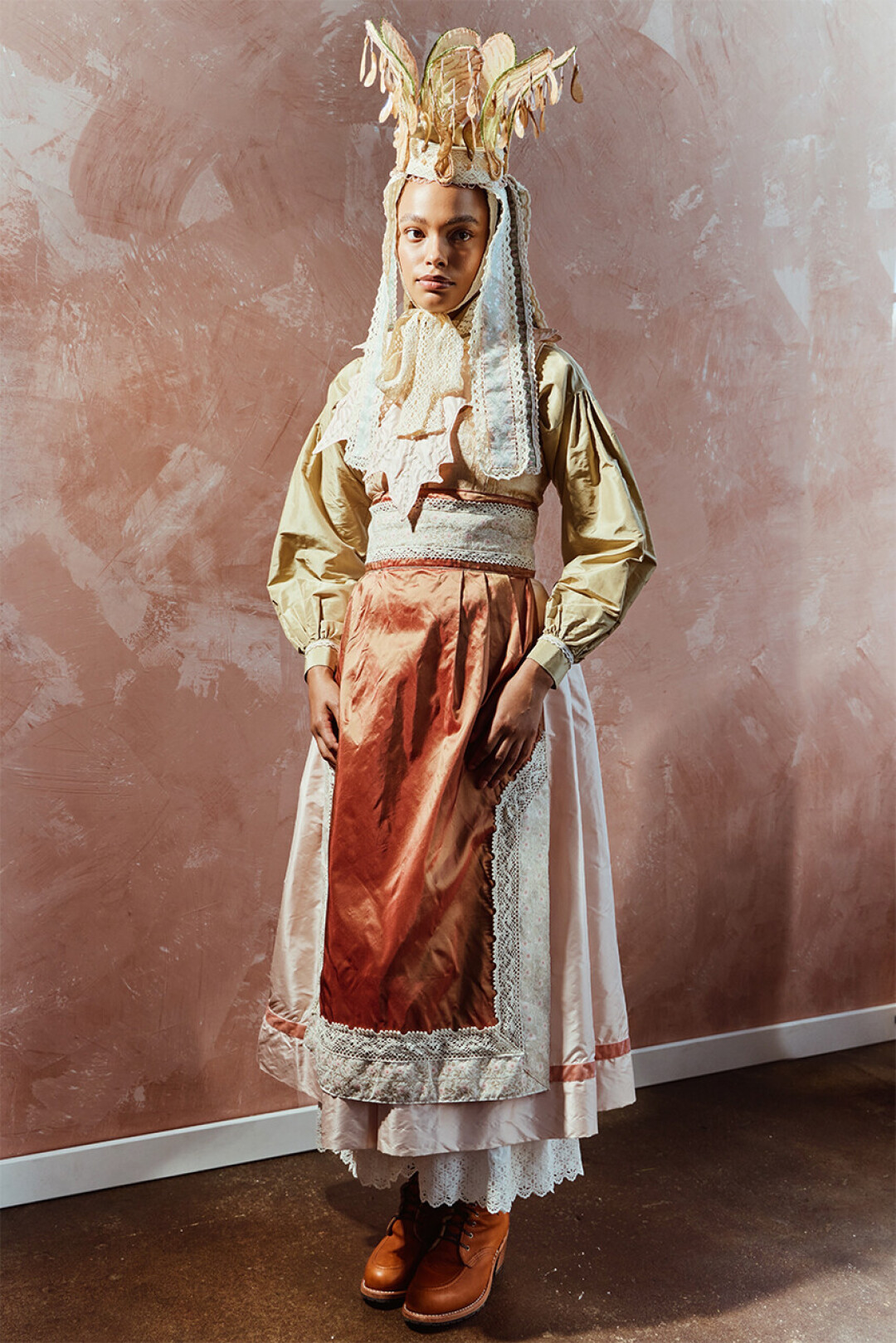
Those seeds were the unsuspecting spark to what became Oberg’s Scandinavian-inspired, visual opus, “The Silver Maple Bride.”
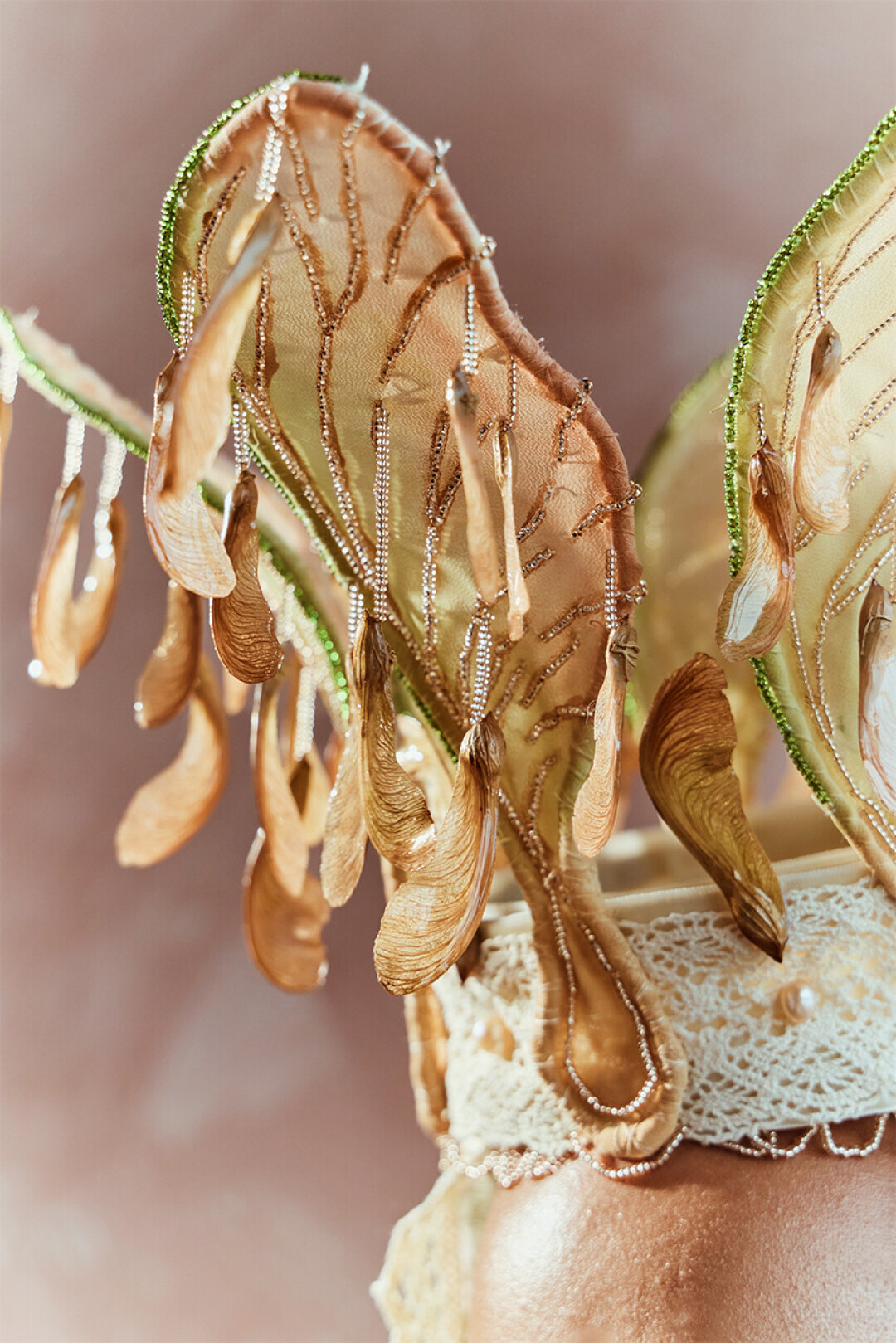
The piece is a romantic fashion feast for the eyes, made by well over 100 hours of hand-beading, “Frankensteining” of multi-source materials and skilled DIY work went into the bridal look — complete with epoxied maple seeds dangling from its larger maple seed-pronged crown.
”
I noticed all these color variants in the maple seeds gathered on the ground and falling from the sky.
I thought, ‘I need to something with these.’ They became the perfect vehicle for my project.

RYLEE OBERG
DESIGNER
The longer one looks at it, the more layers – including the maple leaf-shaped bib – and lacework come into focus. Some of that lace, as well as those delightful maple seeds, come from Eau Claire. The former had already lived its own life, found by Oberg years ago in the aisles of the beloved Antique Emporium, while the seeds were found along Lowes Creek Road.
“I got a strainer with really big holes in it and I went out (by my parents’ house) and was scooping maple seeds and shaking out the dirt and debris, collecting thousands of them,” Oberg recalled.
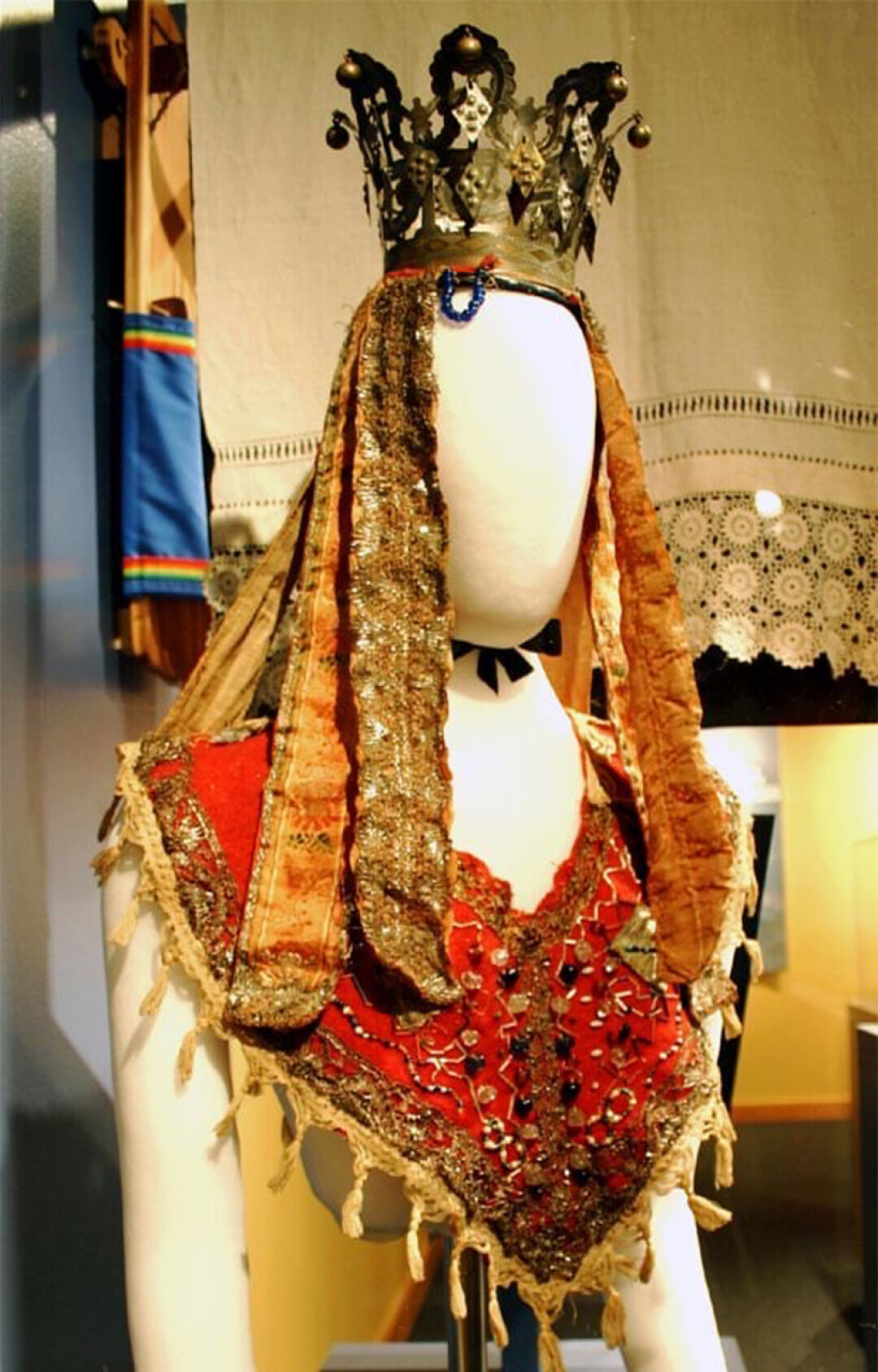
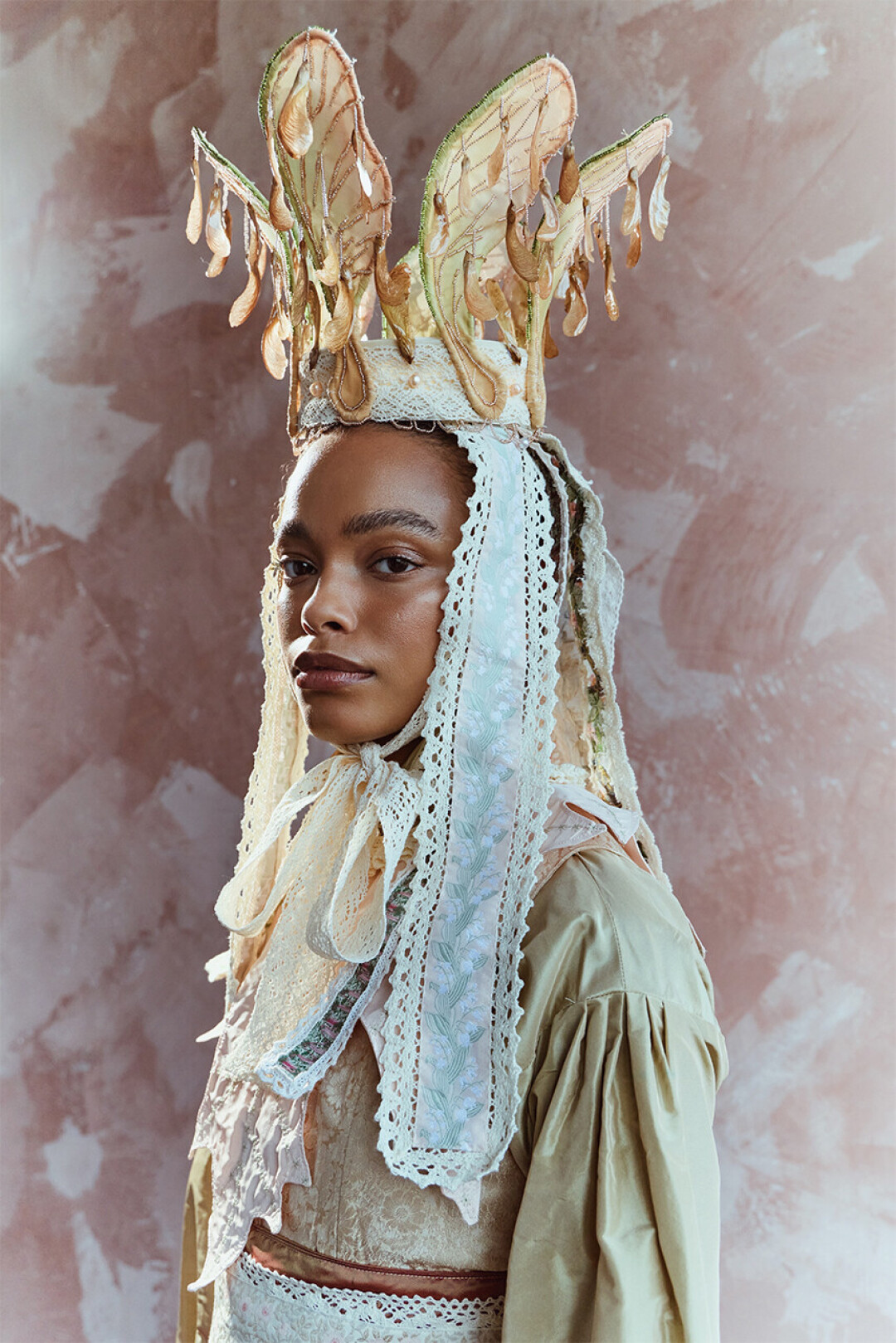
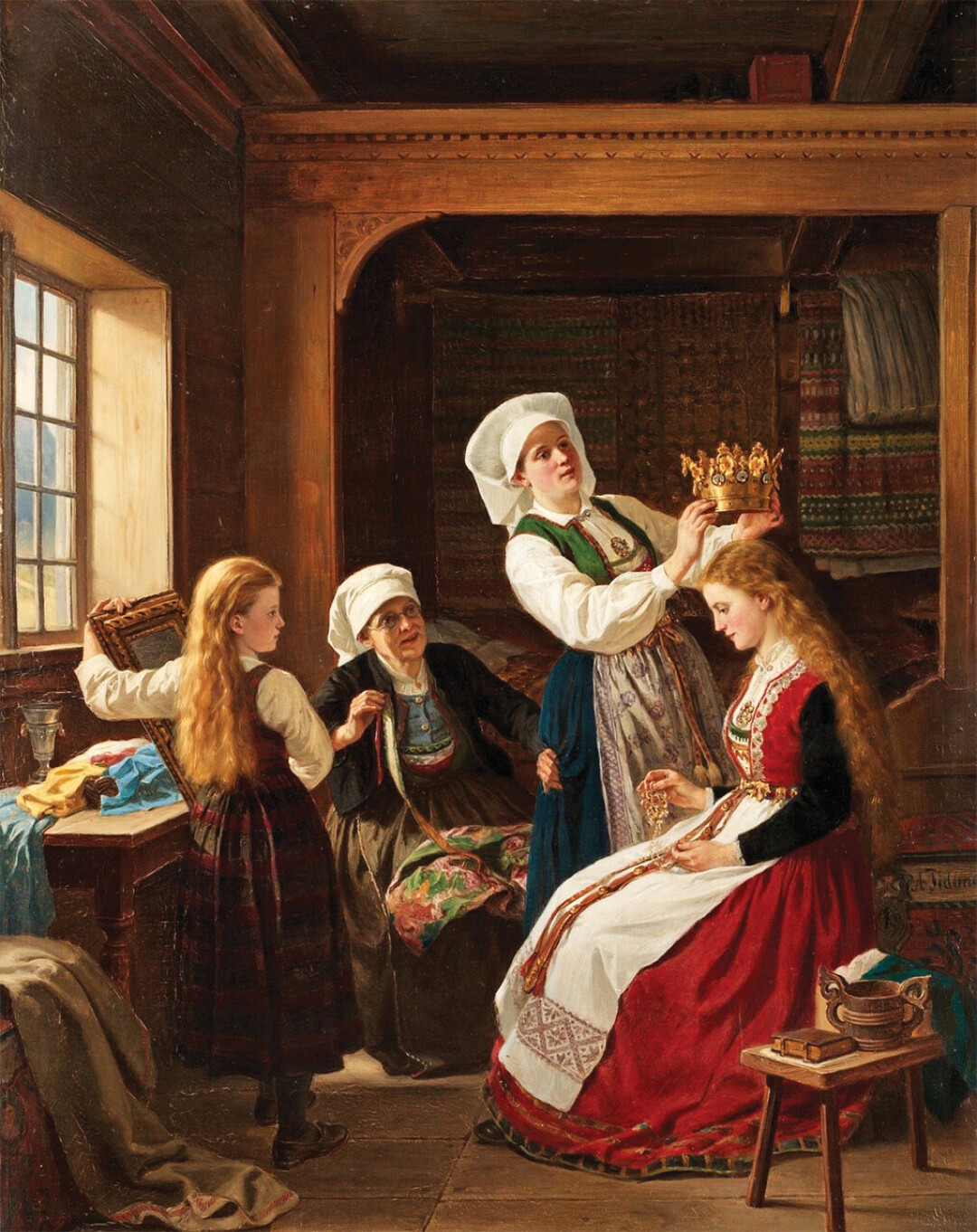
Scraps of silk and even upholstery fabric were used to create the layered bridal look, its structure heavily drawn from the WHS’s archival garments and historical photos depicting Norwegian and Scandinavian brides — two cultures which have shaped the Midwest.
Pederson said she knew Oberg’s work was going to be special, as initial sketches turned into the final maple seed crown.
“It was just this beautiful balance of new pieces that were created from history, made contemporary.” Pederson said of The Silver Maple Bride.
“Think about the head dress and the cape. These pieces are at least 200 years old and Rylee used them as inspiration... it became this door – a door to many other discoveries."
JENNY PEDERSON
PUBLIC PROGRAMS MANAGER, WISCONSIN HISTORICAL SOCIETY
“Both (Boté and Oberg) went well beyond the original prompt,” Funk noted. “We said ‘make something’ and they each made full, entire outfits. … Their excitement and devotion was just so evident.”
And, perhaps most importantly, “Inspired!” was a storytelling experience brought to life through textiles old and new – all rooted in Wisconsin history.
“Think about the head dress and the cape. These pieces are at least 200 years old and Rylee used them as inspiration... it became this door – a door to many other discoveries. I just don't think we could have had better partners or better designers part of this process and program,” Pederson said.
Rave responses from both Funk and Pederson were joined by equal reactions from WHS staff — many of whom supported the execution of the “Inspired!” events. This excitement was mirrored by those who attended the history-inspired ensembles’ debut on Aug. 14.
Displayed next to their reference pieces, Oberg and Boté each presented their research and design processes, and welcomed questions from attendees afterward. Pederson said it was special to watch both emerging designers field one-on-one inquiries after the presentations ended, when attendees got an up-close look at their meticulous works.
For now, The Silver Maple Bride’s time in the spotlight has passed — Oberg kept the ensemble after the event — and Oberg doesn’t have another large-scale project like it in the works, yet.
“I’m not sure where my arrow will point next, exactly,” she said. “I do have a trillion ideas, though.”
View other pieces and collections by Rylee Oberg on her website www.ryleeobergdesigns.com. Oberg can be commissioned or contacted via Instagram DM or email (Obergrylee@gmail.com). Learn more about the Wisconsin Historical Society and its expansive textiles collection at wisconsinhistory.org.