

ECPD Chief Says Other Communities' Reasons For Unhoused 'Drop Offs' in Eau Claire Are Not Adequate
Attorney General Josh Kaul has yet to provide legal guidance, Eau Claire City attorney suggests transportation and drop-off incidents may violate civil and constitutional rights

It’s been nearly 18 months since the City of Eau Claire first sought legal guidance from state Attorney General Josh Kaul on how to handle out-of-town agencies transporting unhoused individuals to Eau Claire – without consent, notice or connection to services.
That initial ask, delivered via letter and Eau Claire City Council resolution in January 2025, has gone unanswered. While there has been acknowledgement by the Attorney General office, no official legal guidance has been provided.
On Tuesday, Aug. 25, the council unanimously passed a second resolution calling on the Attorney General to formally respond to the City's request – one that has been supported by other Wisconsin communities including Madison, La Crosse, Wausau and others.
Locally, residents and housing organizations have continued to sound the alarm, as it relates to the growing number of unhoused people and disproportionate resources available to help them, for years.
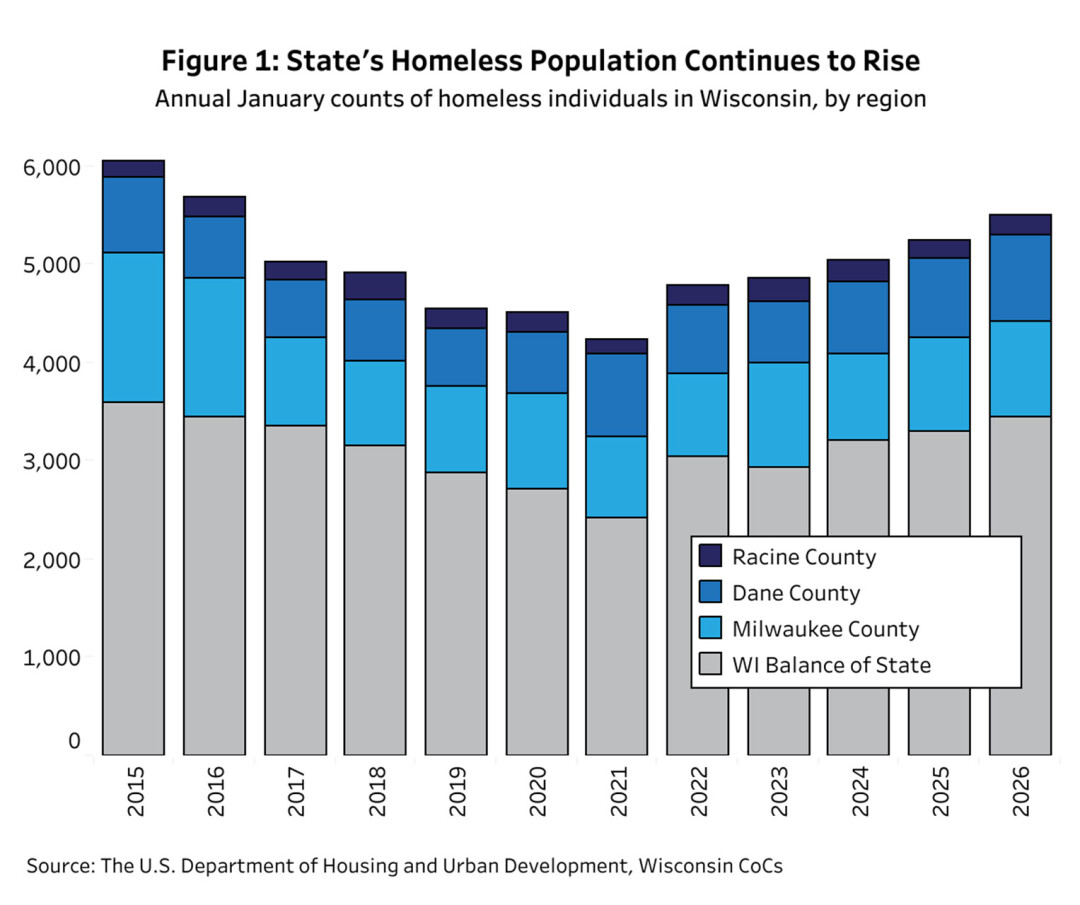
Dale Karls, the communications director of Western Dairyland Economic Opportunity Council which operates Eau Claire's only daytime shelter, said the Eau Claire area homeless population is currently estimated to be between 500-700 people.
There is no singular or overnight solution for remedying what has been identified as a national crisis. The United States Interagency Council on Homelessness says modern-day homelessness is largely a result of failed policies at federal, state and local levels.
But this specific situation, in which unhoused people are transported and dropped off from one community to another – “without any receiving facility, personal family connection” and “often absent any request or legal consent,” Eau Claire City Attorney Steve Nick stated – could at least be lessened with state intervention.
Counties Near & Far Continue Non-Consensual 'Drop Offs' To Eau Claire
The City affirmed, at the Aug. 25 meeting, what it had first stated in the January 2025 letter to the Attorney General: “this is an issue of public safety, civil rights, and law enforcement criminal and civil immunity with corresponding great personal and local governmental consequence.”
In that 2025 letter, a few instances were provided as examples of these “drop offs” to Eau Claire – one made by the Menomonie Police Department, one by the St. Croix County Sheriff’s Office and another by the Durand Police Department.
In all instances, the Eau Claire Police Department (ECPD) were unaware people were being transported and dropped off in Eau Claire.
“These are not transports to the county jail or a receiving medical or mental health facility but often only to the edge of a sidewalk, Kwik Trip or such location without choice, treatment, care, or notice.“
CITY OF EAU CLAIRE
IN A LETTER TO STATE ATTORNEY GENERAL OFFICE
The Menomonie PD reportedly brought a man believed to be under the influence of drugs, but not under arrest, to Eau Claire. He was left at a local shelter which was not open at the time of his drop-off.
In both the St. Croix and Durand law enforcements' instances – in which persons were dropped off at an Eau Claire Kwik Trip and shelter which was already full, respectively – the transported individuals said they did not ask to be taken to Eau Claire.
“Transports have been documented by Eau Claire for the past several years as homelessness has escalated,” the City's original letter stated. “These are not transports to the county jail or a receiving medical or mental health facility but often only to the edge of a sidewalk, Kwik Trip or such location without choice, treatment, care, or notice.
“We believe these transports to be unlawful at worst and unprofessional at best,” the letter continued.

At the Aug. 25 meeting, Nick said this practice has continued with instances of “equal or greater concern” than those cited in the 2025 letter.
He pointed to another incident, this time with Washburn County Sheriff's Office, where an individual had been brought into custody under that office's jurisdiction. Instead of booking that person, a deputy was directed to transport that person to Eau Claire.
The ECPD was not made aware of that transport and drop off, and that person soon after was involved with several incidents, Nick said.
ECPD Says Assumption Eau Claire Has More Resources Is Not An Adequate ‘Reason or Excuse’
On Aug. 25, councilman Larry Mboga asked ECPD Chief Matt Rokus his opinion on why outside agencies would bring people to Eau Claire in this manner. Rokus said ECPD has been given “a variety of reasons or excuses, for a lack of a better term … for a number of years.”
Before the 2025 letter to the state Attorney General, Rokus said ECPD and the City of Eau Claire have attempted a number of other approaches to handle these instances. Those have included follow-up with agencies who transported people to Eau Claire; Rokus’s bringing these concerns to a number of professional organizations; the City Attorney’s Office issuing letters to those outside agencies
Each of these respective efforts lead to no avail, Rokus said.
“Moving people from place to place when they’re already in crisis (without support) … is not really helping that individual. It’s simply moving (them) from one jurisdiction to another so they don’t have to deal with it anymore.”
CITY ATTORNEY STEVE NICK
CITY OF EAU CLAIRE
“(What I have) heard from other agencies is, ‘Eau Claire has more services for them (unhoused people),’ ” Rokus told council. “ ‘We don’t have those services’; ‘we didn’t know what to do with them’ … or just trying to get them out of their community.”
Rokus said many of those jurisdictions do have their own Human Services Department, which would have some sort of supports or services to provide unhoused people.
“We all acknowledge this is a very difficult, broad, big issue,” Nick said. “Moving people from place to place when they’re already in crisis (without support) … is not really helping that individual. It’s simply moving (them) from one jurisdiction to another so they don’t have to deal with it anymore.”
Additionally, Nick said, moving a person into another county without their being a resident, puts that person in the county’s care. That includes their healthcare or other treatment costs falling onto Eau Claire County, he said.
Further, “it’s potentially a fourth amendment, U.S. Constitution violation,” Nick said.
Nick called on local and state elected officials, the Wisconsin League of Municipalities and Counties Association to support the City of Eau Claire's second resolution calling for state guidance on the matter.
ECPD Makes Own Policy While Awaiting State Guidance
Absent direction from the Attorneys General office, ECPD has developed its own policy related to these types of situations, Rokus said.
That policy prohibits ECPD personnel from transporting people outside of the city unless that person has requested it, Rokus said, and officers cannot suggest transportation.
If that person seems to be in crisis of any sort and requests transport, the officer must gain supervisory approval before doing so and notify the receiving jurisdiction of that transport beforehand.
Rokus said even if an individual is transported to another community with approval, ECPD officers are required to make a “warm hand-off to services.” That means connecting the individual being transported, to another person or service provider.
“Some of the issues raised are ones that I think are true around the state.”
ATTORNEY GENERAL JOSH KAUL
ON EAU CLAIRE'S REQUEST FOR GUIDANCE, IN A 2025 INTERVIEW
Notably, this policy or similar policies are not uniform across the state, yet these “drop-off” occurrences have a history statewide.
In 2025, Attorney General Kaul told WQOW that Eau Claire's request for guidance was a “first” in Wisconsin, though he acknowledged “some of the issues raised are ones that I think are true around the state.”
Nick said he has communicated with the Attorney General office throughout 2026 and as recent as the morning of Aug. 25, “however we continue to get the response ... the issue has been received and is being considered but that, basically, they don’t have authority to release preliminary drafts or discuss it with us further.”
This is a developing story. The full Aug. 25 Eau Claire City Council meeting can be viewed on YouTube (this resolution discussion begins around the 1:24:14 mark) and the full meeting agenda can be found online.